
Small Detail, Big Impact: Bathroom Handle Trends and How They Shape Your Bathroom Design
When planning a new bathroom, most attention naturally goes towards cabinets, tiles, appliances and layout. Yet one of the most influential design elements is often the smallest. Bathroom handles, from basin mixers and shower controls to cabinet pulls and flush plates, play a critical role in how your bathroom looks, feels, and functions on a daily basis.
The right handle choice can elevate a simple bathroom into a refined, cohesive space, whilst a poorly chosen handle can quietly undermine an otherwise well-considered design. In this guide, you will find expert insight into current bathroom handle trends, how they influence different bathroom styles, and how to choose options that look right and perform well over time.
Why Bathroom Handle Design Matters More Than You Might Think
Bathroom handles are one of the most frequently touched elements in the room. You interact with them every single day, and often with wet hands. This regular contact means their quality, finish, and ergonomics have a direct impact on comfort and longevity.
From a design perspective, bathroom cabinet handles act as visual punctuation. They draw the eye, introduce contrast or continuity, and often set the tone for the entire scheme. In modern bathroom design, handles are no longer an afterthought. They are chosen deliberately to reinforce the overall aesthetic.
Homeowners increasingly recognise that thoughtful handle selection makes a noticeable difference and search trends around bathroom handle design, modern bathroom handles, and bathroom cabinet handles UK reflect a growing awareness of this detail.
Bathroom Handles UK: Current Trends
Minimalist Forms with Refined Detailing
Clean-lined handles remain dominant in contemporary bathrooms. Slim levers, discreet controls, and pared-back cabinet pulls suit the modern preference for calm, uncluttered spaces.
The key shift is subtle refinement. Rather than purely flat or sharp-edged designs, many manufacturers now offer softened edges, gentle curves, and tactile finishes. This approach to modern bathroom handles keeps the space feeling contemporary while improving comfort.
Brands such as Ramon Soler are well known for precision-engineered brassware that balances visual simplicity with ergonomic performance, making minimalist handles easier to live with day to day.
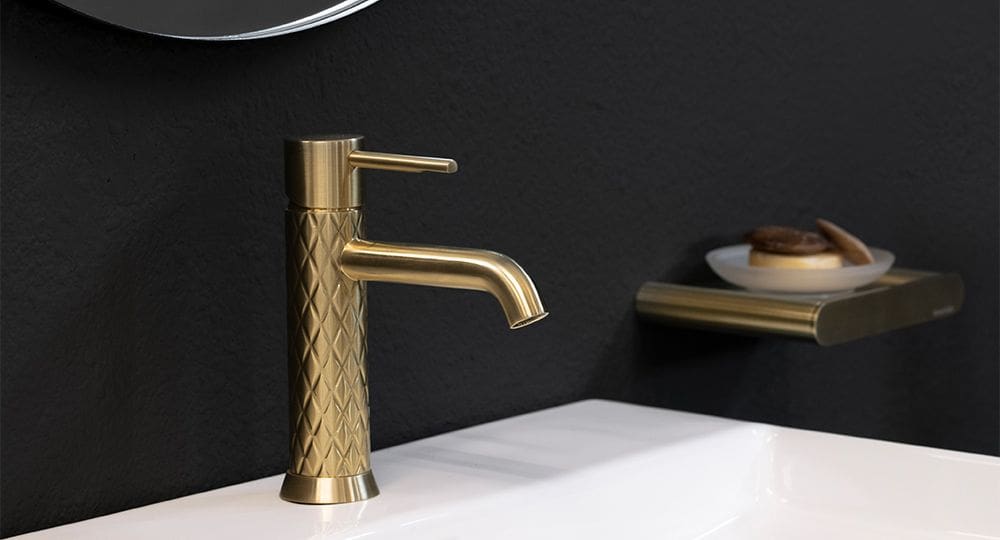
Matt and Brushed Finishes Over High Gloss
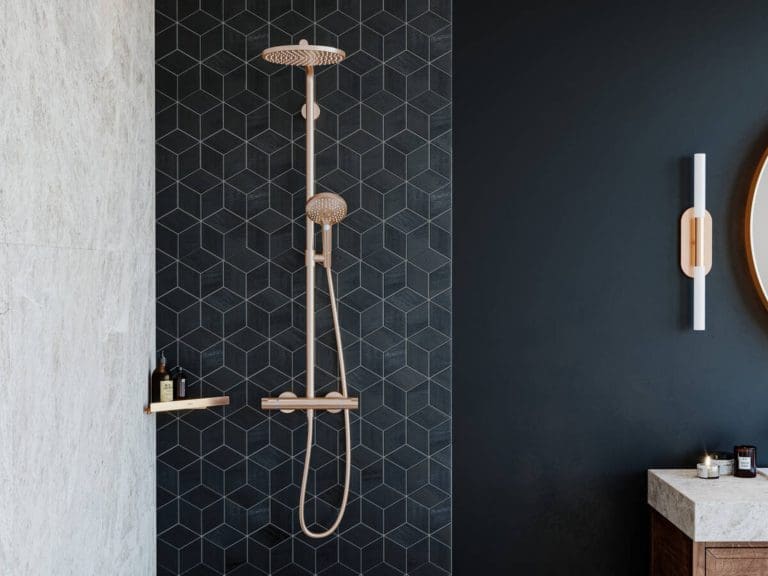
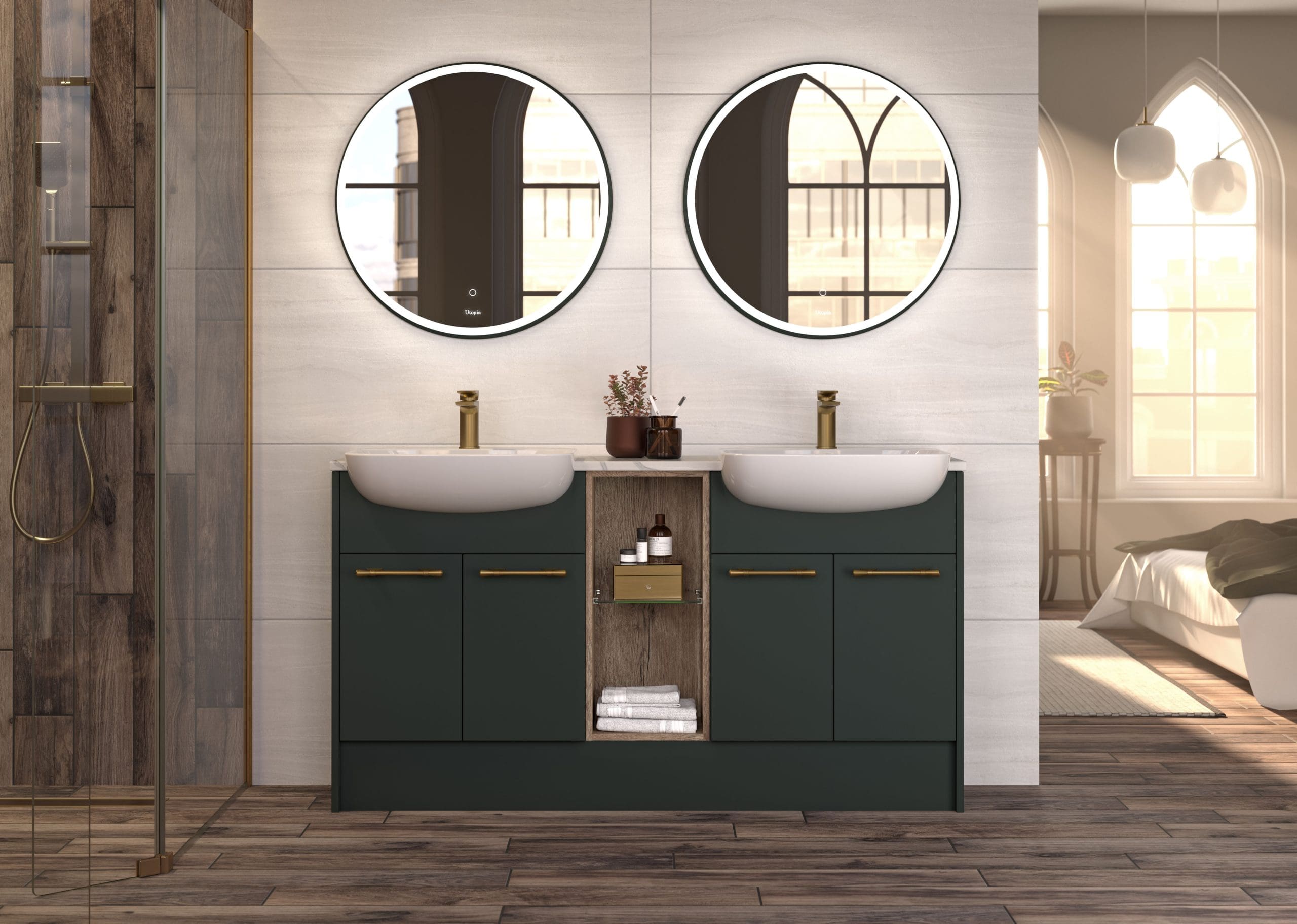
Highly polished chrome still has a place, yet current bathroom handle trends lean towards softer finishes. Brushed chrome, matt black, brushed brass, and satin nickel are increasingly popular across taps, showers, and furniture hardware.
These finishes reduce visible fingerprints and watermarks, making them practical as well as stylish. They also photograph well, which has helped drive their popularity online and in showroom displays, making them ideal as contemporary bathroom handles.
Manufacturers such as Utopia offer coordinated handles and brassware ranges in multiple finishes, helping you maintain visual consistency across the room.
Black Matt Handles as a Design Anchor
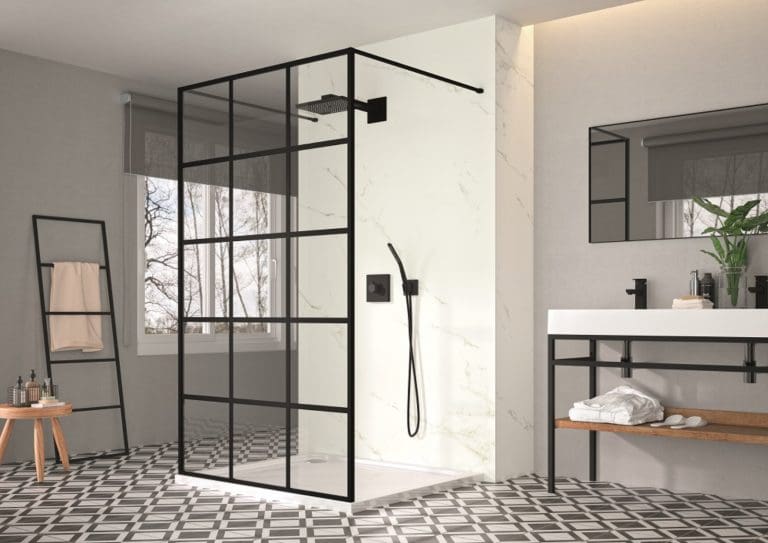
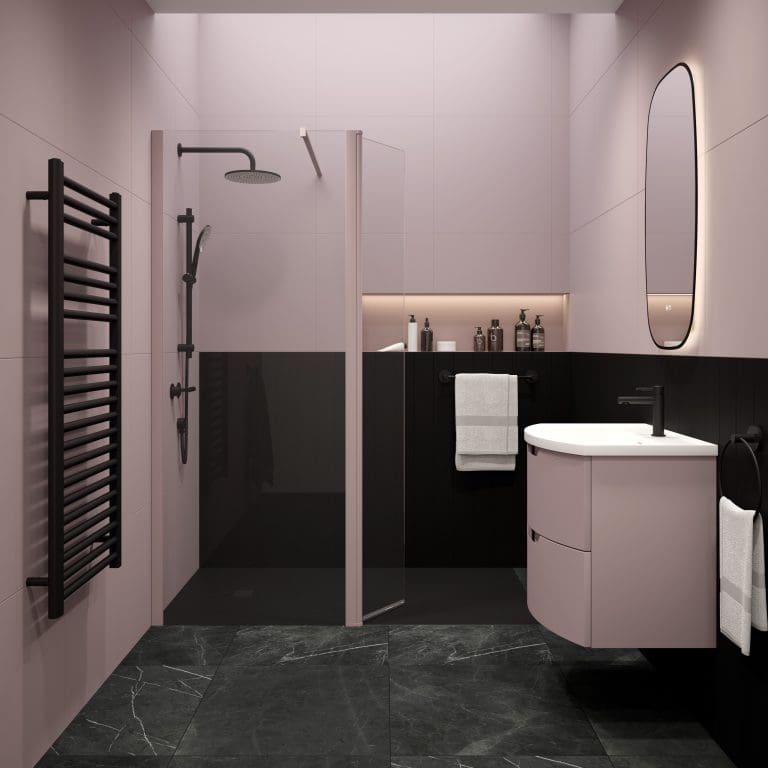
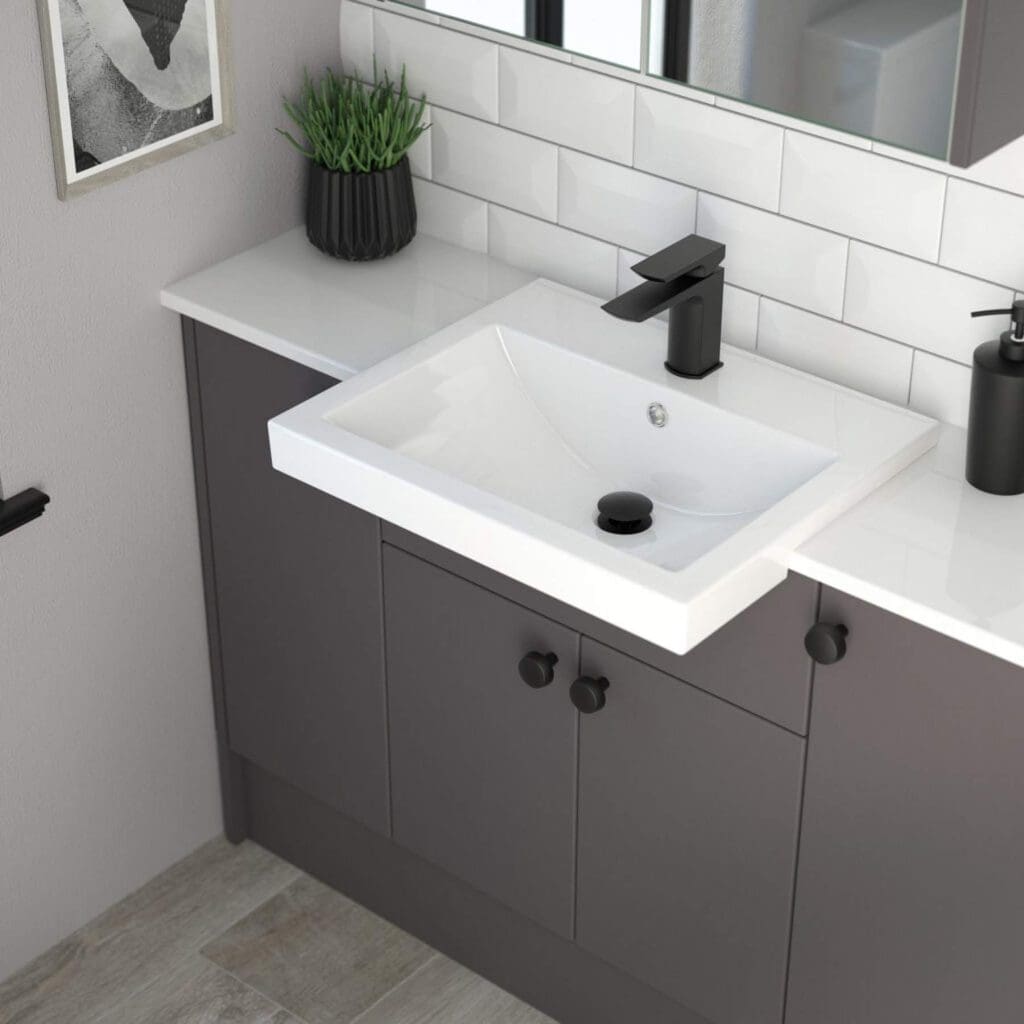
Black bathroom handles continue to be a strong trend, especially in contemporary and industrial-style bathrooms. When used thoughtfully, black matt handles create contrast and definition, grounding lighter colour schemes.
They work particularly well against pale stone tiles, warm neutrals, or wood-effect finishes. The key is restraint. Black handles tend to look most effective when repeated across taps, showers, and furniture hardware, creating a deliberate design rhythm.
Contemporary Bathroom Handles
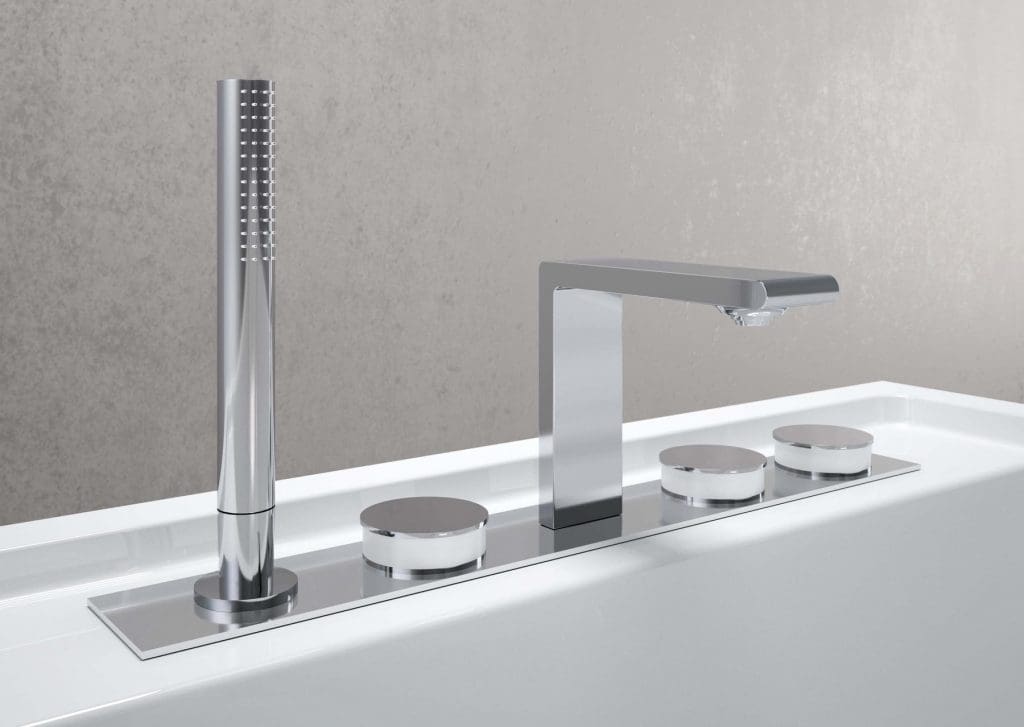
Contemporary bathrooms favour clean geometry and visual simplicity. Handle designs typically feature straight levers, slim profiles, and understated proportions. In these spaces, handles often blend into the background rather than drawing attention. Finishes such as brushed chrome, matt black, or soft stainless steel reinforce the streamlined look.
Pairing wall-mounted taps with discreet shower controls helps maintain visual flow. Bathroom cabinet handles are usually linear or integrated, keeping the focus on surfaces rather than hardware.
Traditional and Classic Bathroom Handles
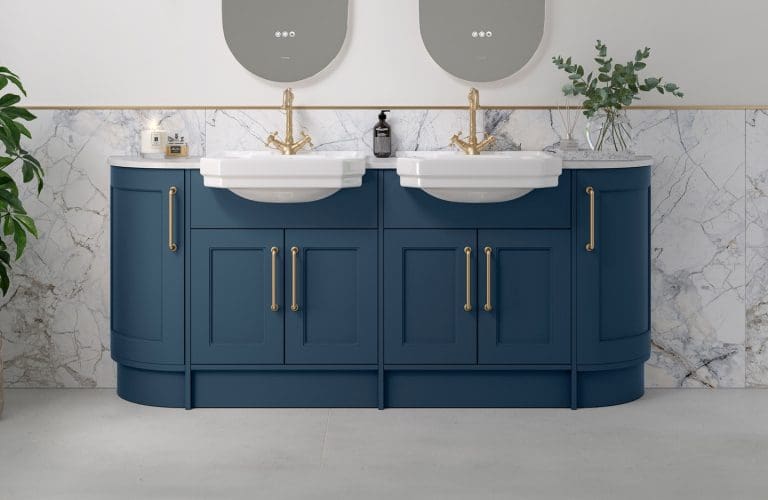
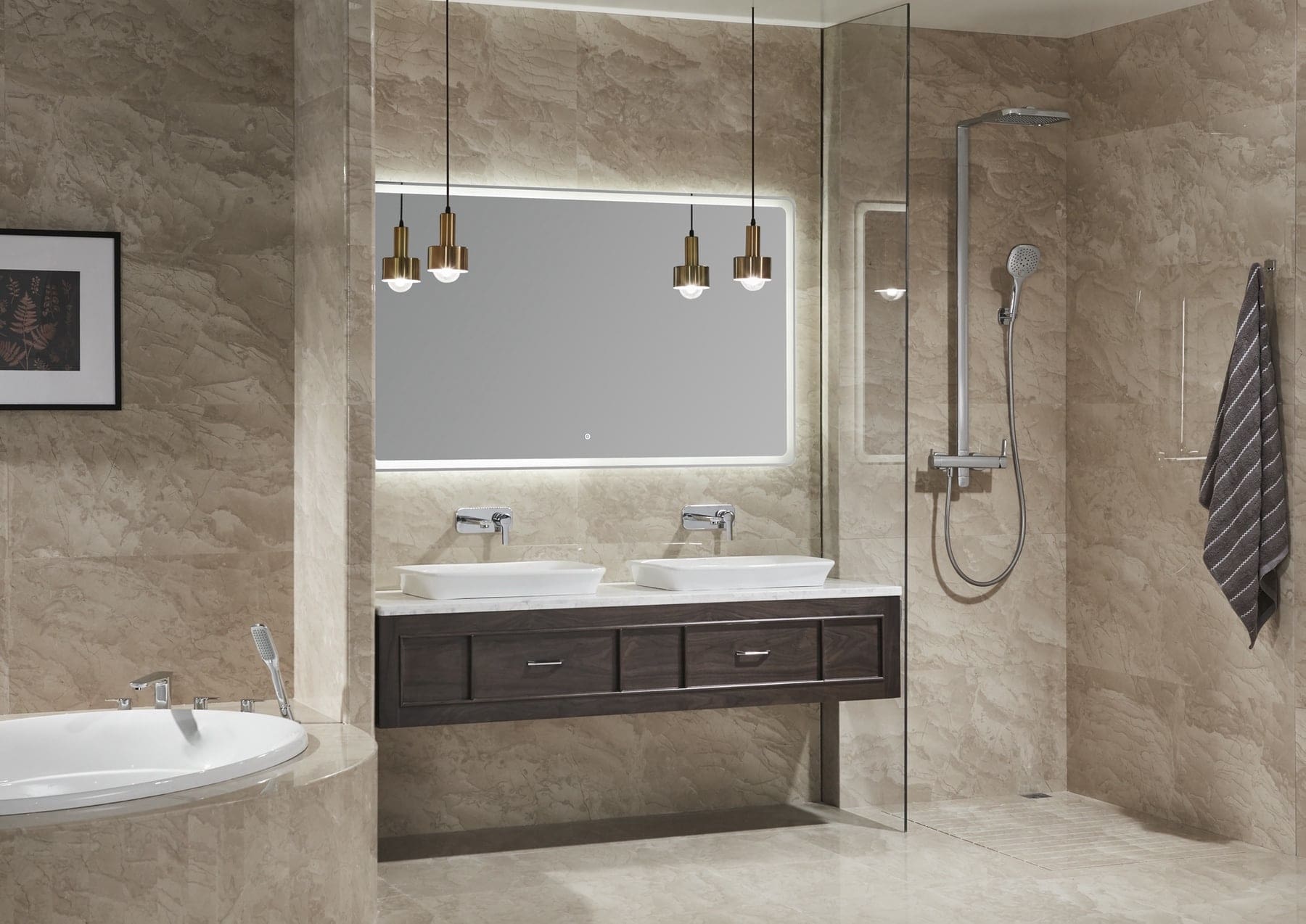
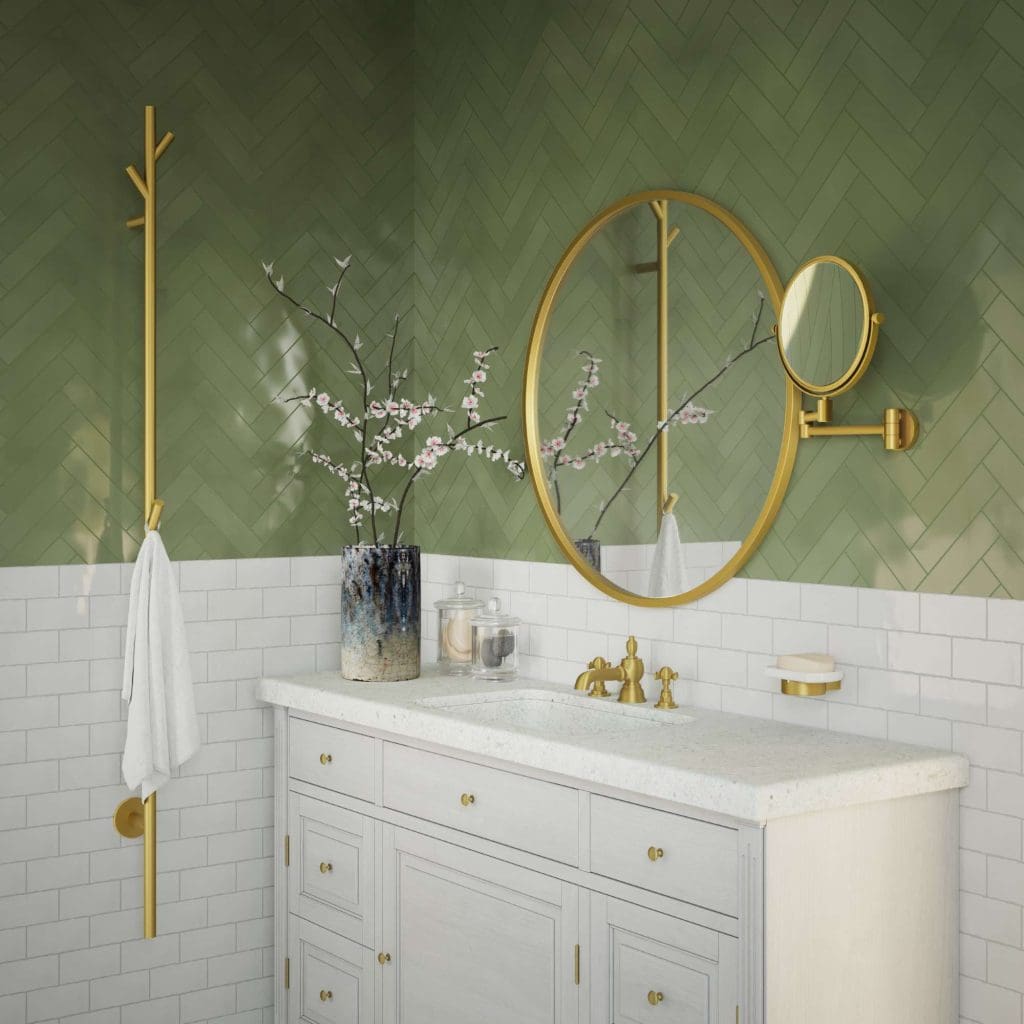
Traditional bathrooms rely on familiar forms and decorative detailing. Crosshead taps, ceramic indices, and gently curved levers remain popular choices for bathroom handles UK homeowners love. Chrome and polished nickel finishes work well in period-inspired spaces, reflecting light and complementing classic sanitaryware shapes. Subtle detailing, such as engraved markers or porcelain inserts, adds authenticity without feeling overstated.
Brands such as Sonas are frequently chosen for traditional-style brassware that meets modern performance standards while retaining classic appeal.
Industrial-Inspired Bathroom Handles
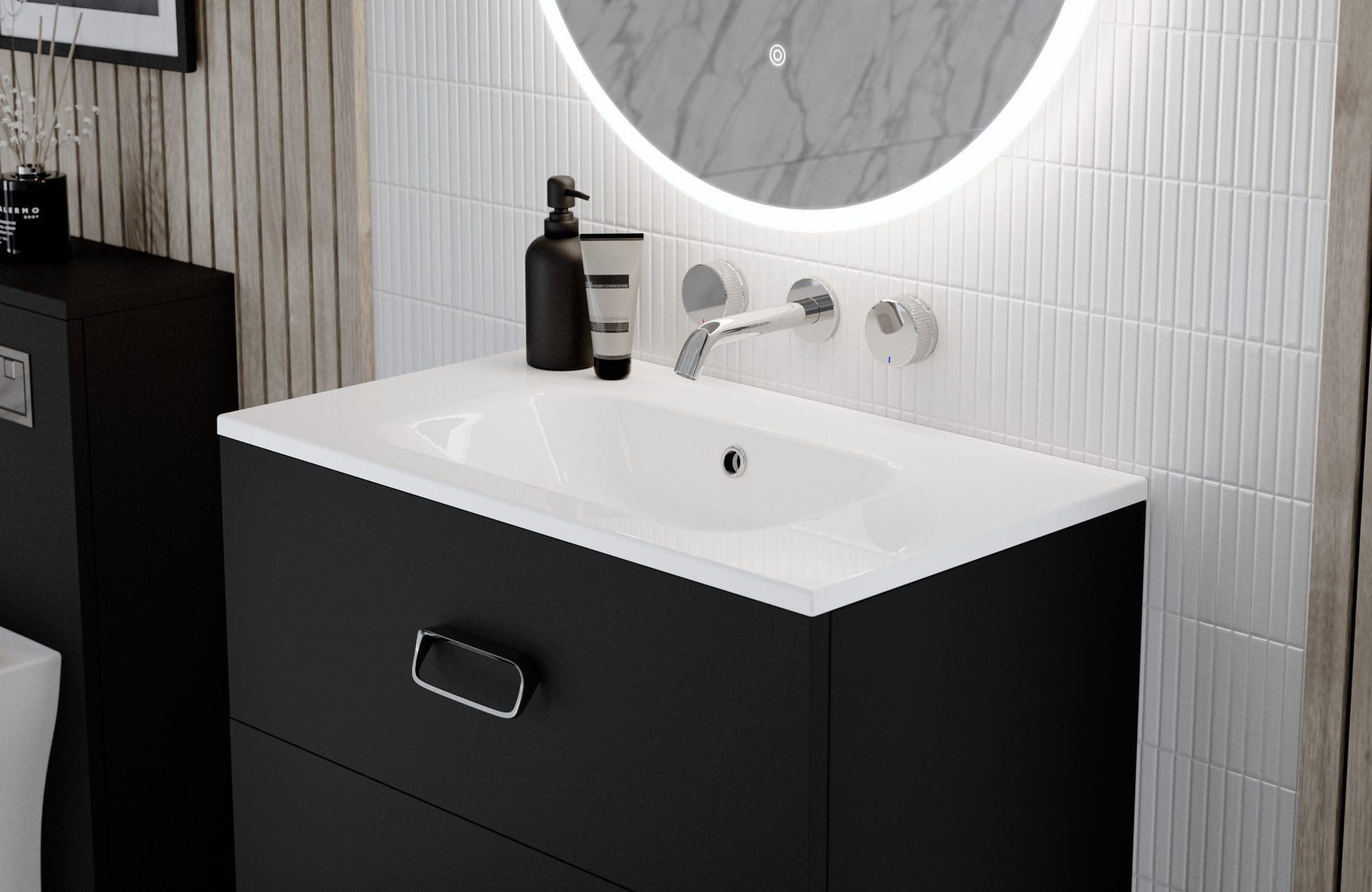
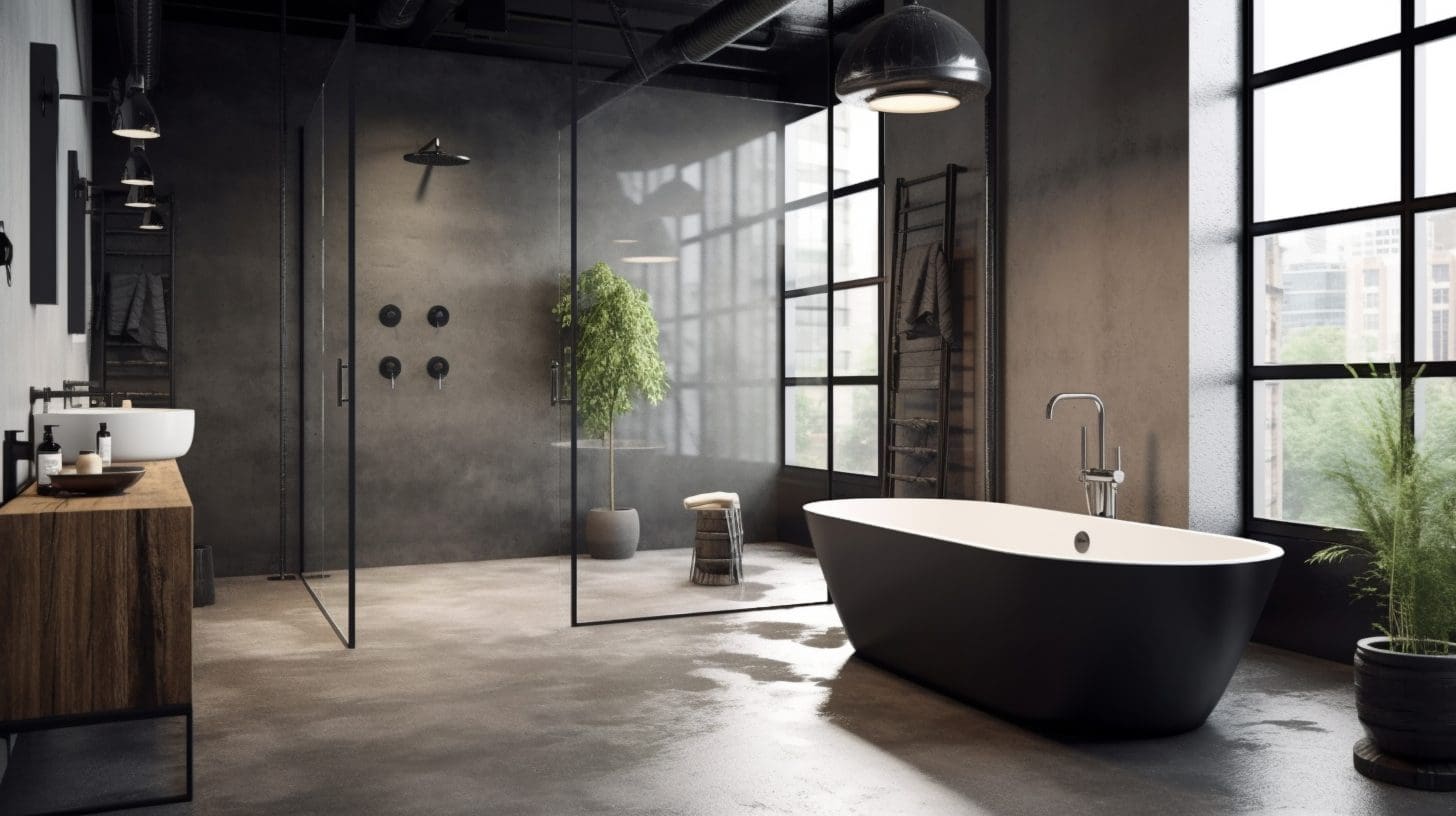
Industrial bathrooms draw influence from utilitarian spaces, favouring robust materials and bold contrasts. Handles in this style often feature matt black finishes, exposed fixings, or knurled textures.
Knurled handles have seen a notable rise in popularity, offering both visual interest and enhanced grip. They work particularly well in showers and basin taps where wet hands are common.
When using industrial-style handles, balance is essential. Pairing them with softer textures such as concrete-effect tiles or warm wood cabinetry prevents the space from feeling cold.
Scandinavian and Soft Modern Bathrooms
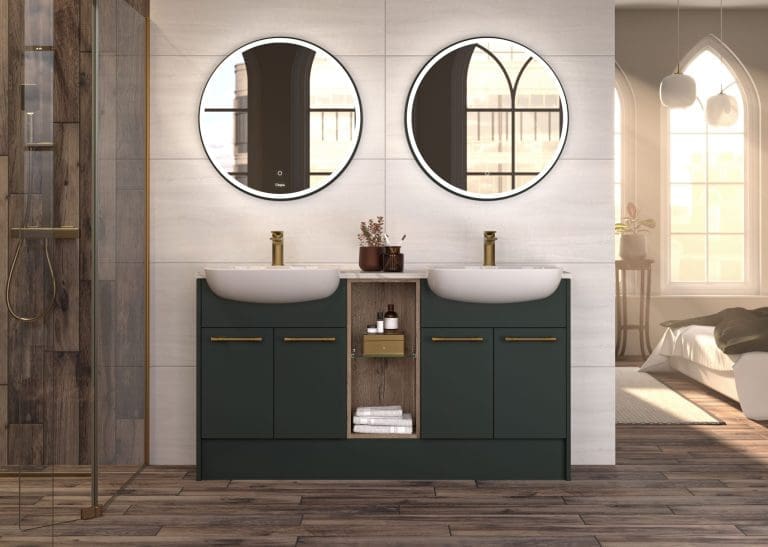
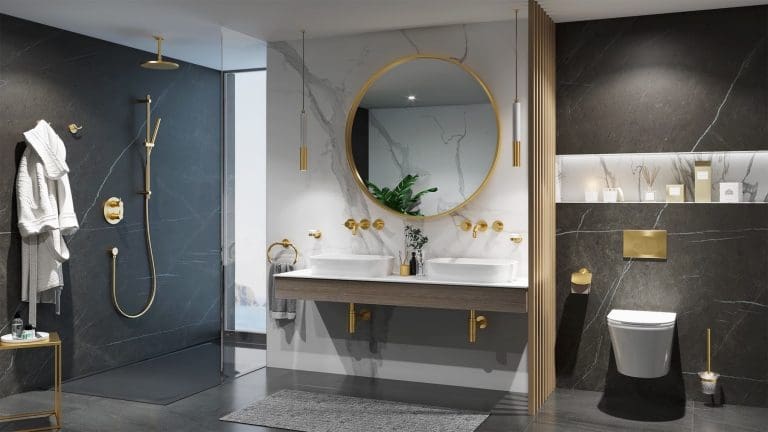
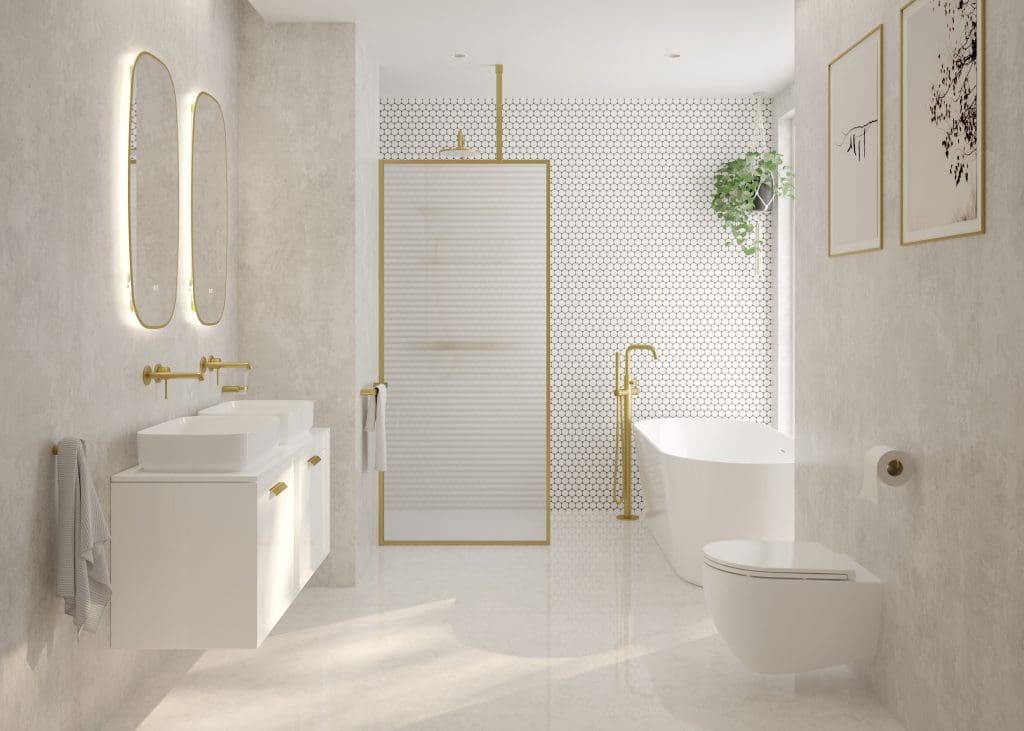
Scandi-inspired bathrooms prioritise warmth, simplicity, and natural materials. Handles tend to be slim and understated, often in brushed brass, soft bronze, or muted metallic tones.
These finishes add warmth without overwhelming the space. Subtle curves and tactile surfaces enhance the calm, relaxed feel that defines this style.
Furniture brands such as Decosan often incorporate integrated handle solutions that suit Scandinavian bathrooms particularly well, maintaining clean lines while adding functional detail.
How Bathroom Handles Influence Perception of Space
Bathroom handles can subtly affect how large or small a room feels. In compact bathrooms, oversized handles or visually heavy finishes can make the space feel cluttered, whereas slimline designs and lighter finishes help maintain openness.
Wall-mounted taps with minimal controls create the illusion of more surface space around the basin. Handleless bathroom furniture or recessed pulls reduce visual noise, which is especially effective in en-suites and cloakrooms.
In larger bathrooms, bolder handles can add definition and structure, helping to anchor different zones within the space.
Coordinating Handles Across the Bathroom
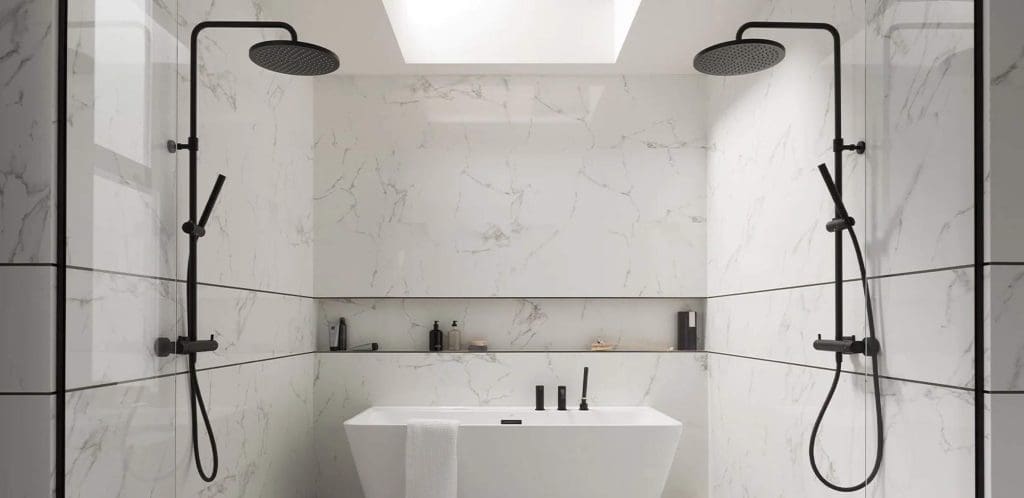
One of the most common design mistakes is mixing too many finishes or handle styles. While contrast can work, it needs to be intentional.
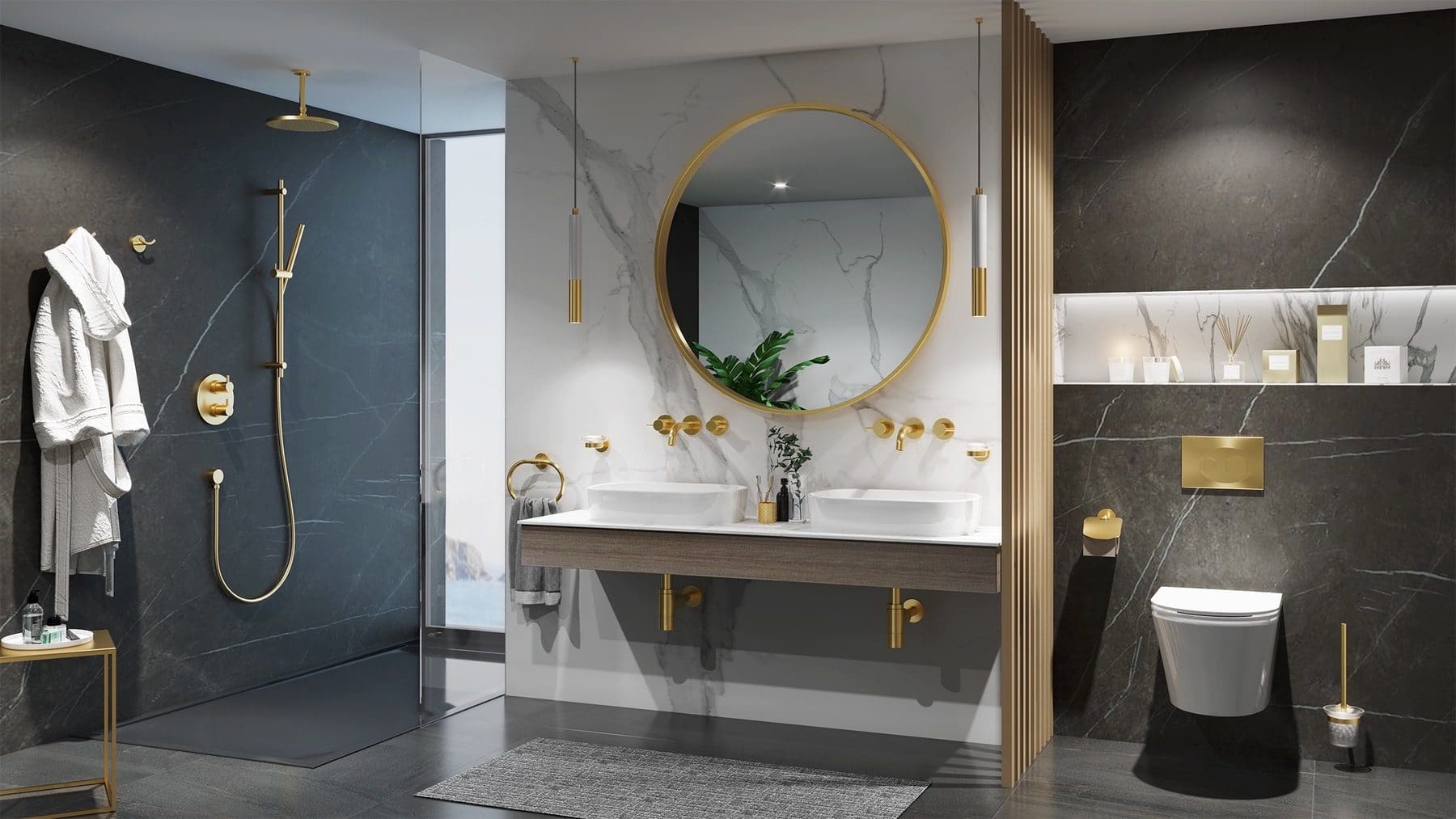
A well-designed bathroom usually limits itself to one primary handle finish. This finish is repeated across taps, showers, and furniture hardware. Secondary finishes, if used, are subtle and purposeful. For example, a bathroom might feature brushed brass taps and shower controls, paired with matching cabinet handles. Accessories such as towel rails can then echo the same finish for cohesion.
Popular bathroom brands like Roman often provide complementary hardware finishes across enclosures and fittings, making coordination easier.
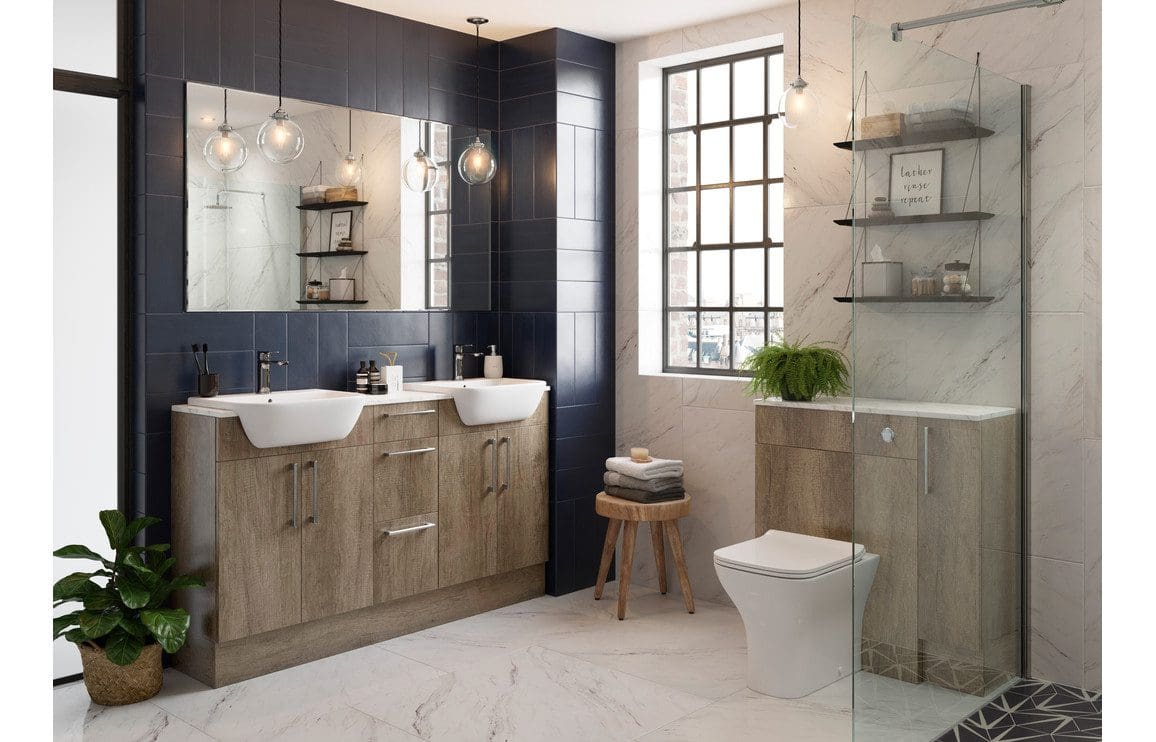
Practical Considerations That Should Guide Your Choice
- Comfort and Grip
Bathroom handles should feel comfortable in use. Overly sharp edges or very slim levers can become uncomfortable over time. Textured or gently rounded designs offer better grip, especially in showers.
- Durability and Maintenance
Bathrooms are high-humidity environments. Choose handles with durable finishes that resist corrosion and wear. Brushed and matt finishes often hide watermarks better than high-gloss options.
- Ease of Cleaning
Smooth, simple forms are easier to keep clean. Complex detailing may look attractive initially, yet can trap limescale and soap residue.
- Quality of Internal Mechanisms
A bathroom handle that looks good but feels loose or stiff quickly undermines the experience. Established brands such as Acquabella and Interlubke focus heavily on build quality and long-term reliability, which matters just as much as appearance.
Bathroom Handle Trends That Are Fading
While trends evolve, some handle styles are becoming less common in modern UK bathrooms:
- Overly ornate detailing in contemporary spaces
- Highly reflective finishes that show marks easily
- Mismatched finishes without a clear design rationale
That said, personal preference always matters. A well-executed design that suits your home will always outlast fleeting fashion.
Choosing Bathroom Handles That Will Stand the Test of Time
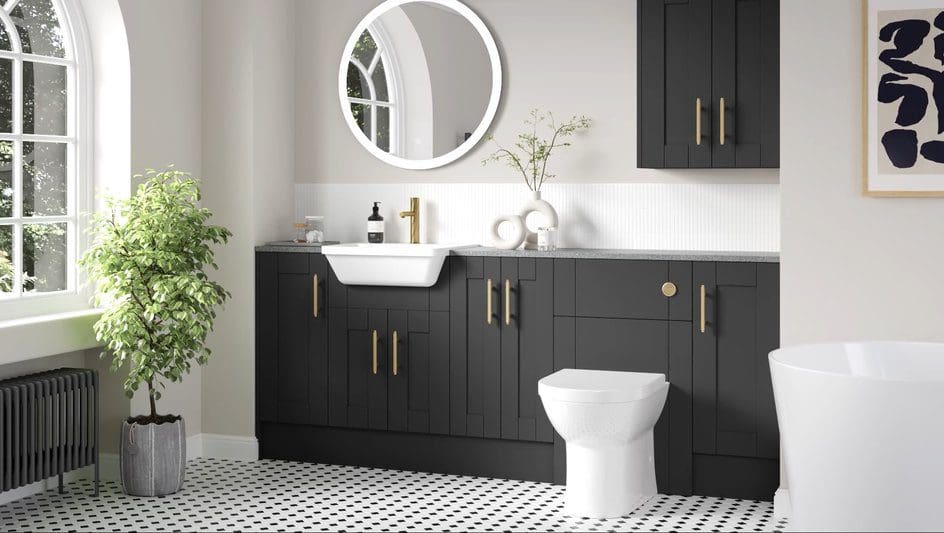
The most successful bathrooms balance current trends with timeless principles. Neutral finishes, well-proportioned handles, and consistent detailing tend to age better than statement pieces chosen purely for novelty.
Think about how you want the bathroom to feel in five or ten years. Bathroom handles that are comfortable, durable, and visually calm usually deliver the best long-term satisfaction.
Final Thoughts: The Power of Thoughtful Detail
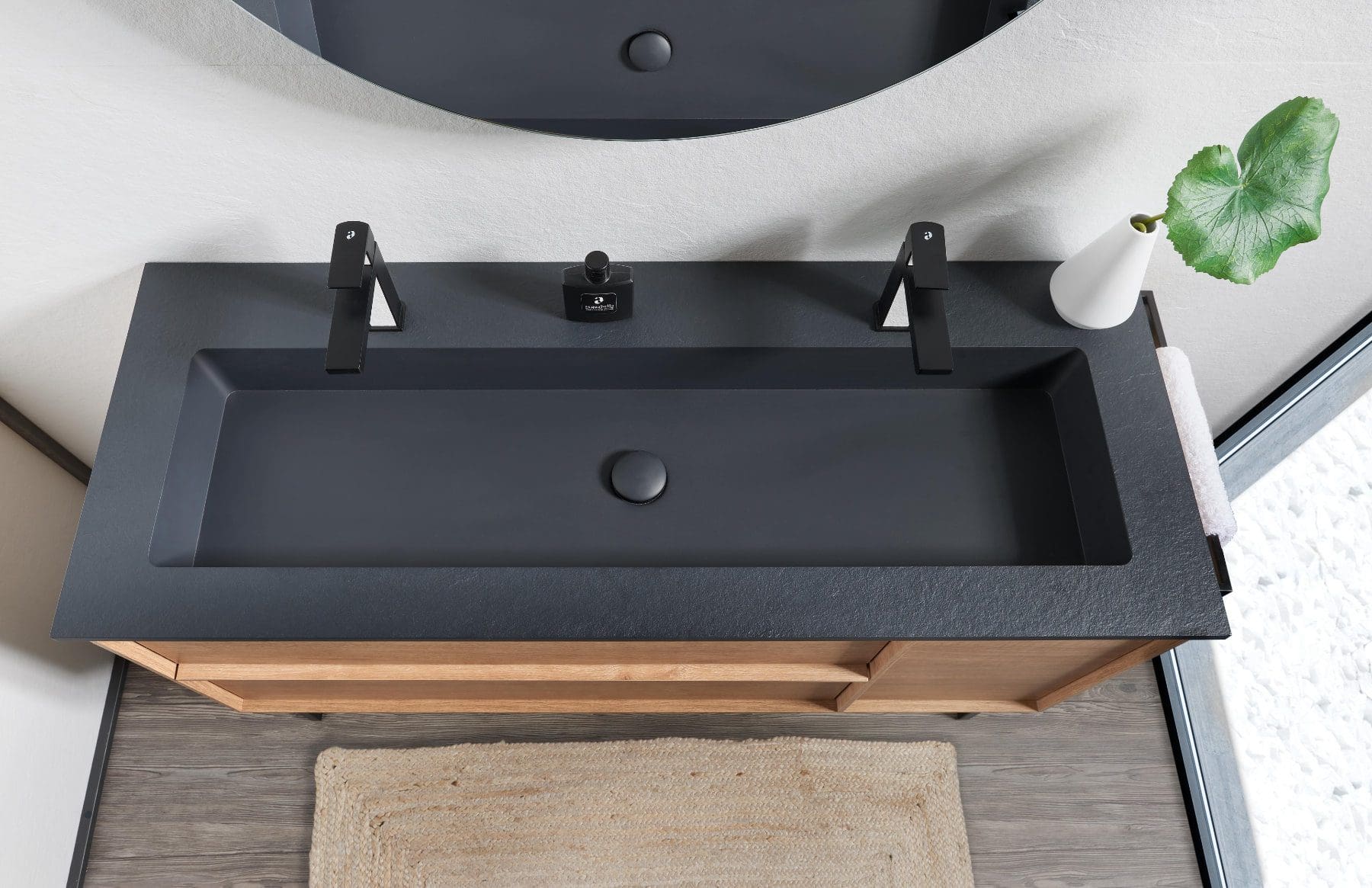
Bathroom handles may be small, yet their impact on both design and daily use is significant. When chosen with care, they reinforce your chosen style, enhance comfort, and contribute to a bathroom that feels cohesive and well considered.
By paying attention to finish, form, and function, you create a space that feels intentional rather than assembled. Whether your bathroom style leans modern, traditional, industrial, or softly contemporary, the right handles help bring the whole design together.
If you take one thing from this guide, let it be this: treat bathroom handles as an integral part of the design process, not a final afterthought. The difference is always noticeable.