
Bathroom Plumbing Layouts in UK Homes: What Goes Where and Why
When planning a bathroom renovation, most homeowners focus first on layout aesthetics — tile finishes, brassware styles, vanity units and shower enclosures. Yet the success of any bathroom project depends on something far less visible: the plumbing infrastructure.
Understanding how bathroom plumbing layouts UK homes rely on are structured is essential before finalising any design. Soil pipe locations, waste gradients, first-fix pipework and water supply positioning all determine what is realistically achievable. Overlooking these technical foundations can lead to expensive alterations, restricted product choice or compromised performance.
At My Bathroom Specialist, we work with homeowners and installers across the UK, supplying bathroom furniture, shower enclosures, trays and brassware from brands such as Sonas, Ramon Soler, Roman, Acquabella, Decosan, Interlubke and Utopia. Across a wide range of projects, one pattern consistently emerges: when bathroom plumbing layouts are planned early — rather than adapted later — renovations proceed more smoothly and deliver better long-term results.
This guide explains standard bathroom plumbing layouts UK properties typically follow, including pipe measurements, drainage fall requirements, first-fix considerations, regulatory compliance and common structural constraints.
What is Meant by a Bathroom Plumbing Layout?
A bathroom plumbing layout refers to the planned positioning of hot and cold water supply pipes, waste pipes, soil pipes and connection points for toilets, basins, showers and baths. In bathroom plumbing layouts UK homes use, drainage routes and soil stack positioning usually determine fixture placement and layout flexibility.
Why Bathroom Plumbing Layouts UK Homes Use Are So Important
Bathroom plumbing layouts are not just about pipe placement — they directly influence:
- Drainage efficiency
- Water pressure performance
- Installation costs
- Furniture compatibility
- Future maintenance access
- Compliance with UK Building Regulations
In many UK homes — particularly period properties — external soil stacks and limited floor void depth restrict how far fixtures can be moved. Even in newer properties, gravity drainage principles still apply. Bathroom pipe positions must maintain adequate fall to ensure reliable waste removal.
When bathroom plumbing layouts UK renovations depend on are designed around existing infrastructure, homeowners avoid unnecessary structural work and unexpected cost escalation.
Toilet Plumbing Layouts in UK Bathrooms
The toilet is typically the most restrictive fixture within bathroom plumbing layouts.
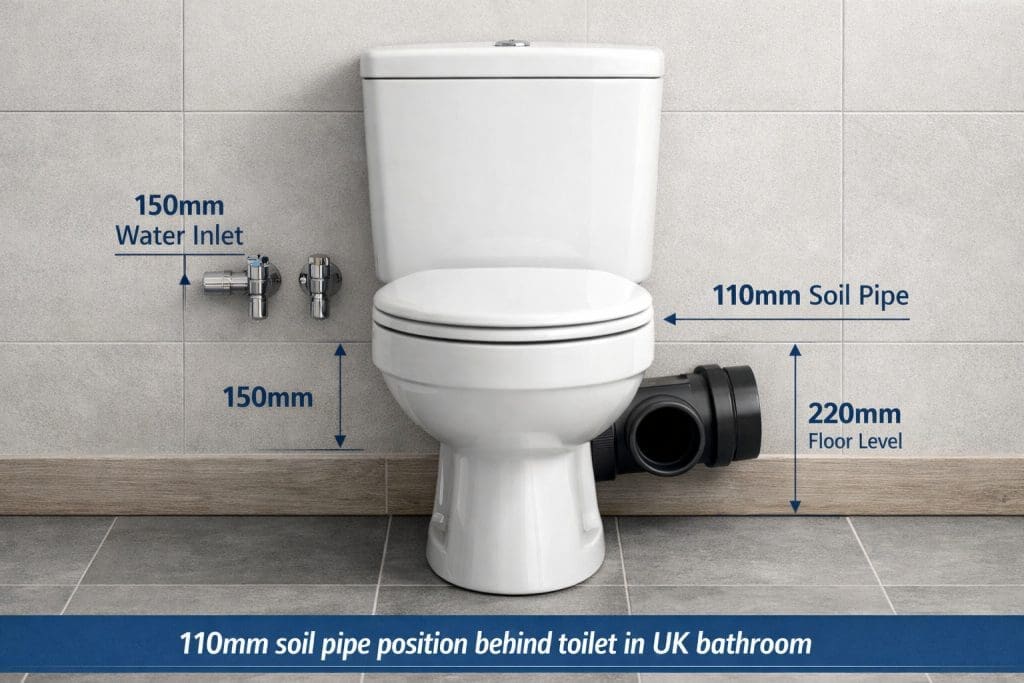
Soil Pipe Position
- Standard diameter: 110mm
- Typical centre height: 180–230mm from finished floor
- Must maintain gravity fall to soil stack
- Often exits externally in older UK homes
Because of its size and drainage requirements, the soil pipe frequently dictates the rest of the bathroom layout.
Water Supply Position
- 15mm pipe
- Usually positioned 150mm above finished floor
- Located to the left or right of the pan
Wall-Hung Toilets & Concealed Installations
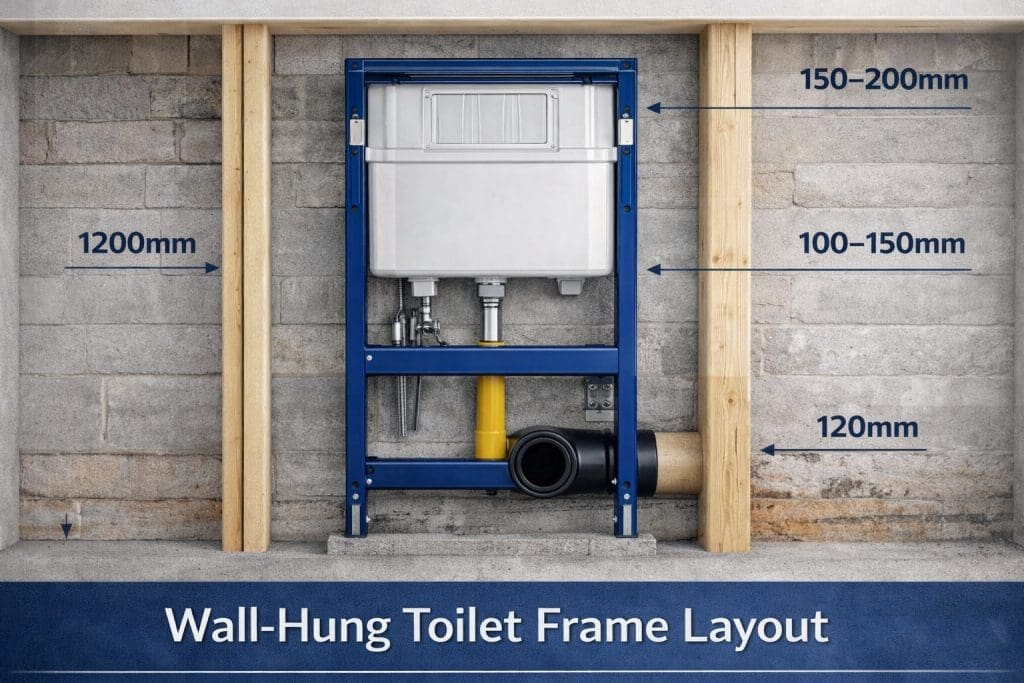
Modern bathroom plumbing layouts UK homeowners increasingly prefer include wall-hung toilets paired with concealed cistern frames.
Typical requirements:
- Frame depth: 150–200mm
- Waste centre height: approx. 220mm
- Structural wall support
- Access panel for servicing
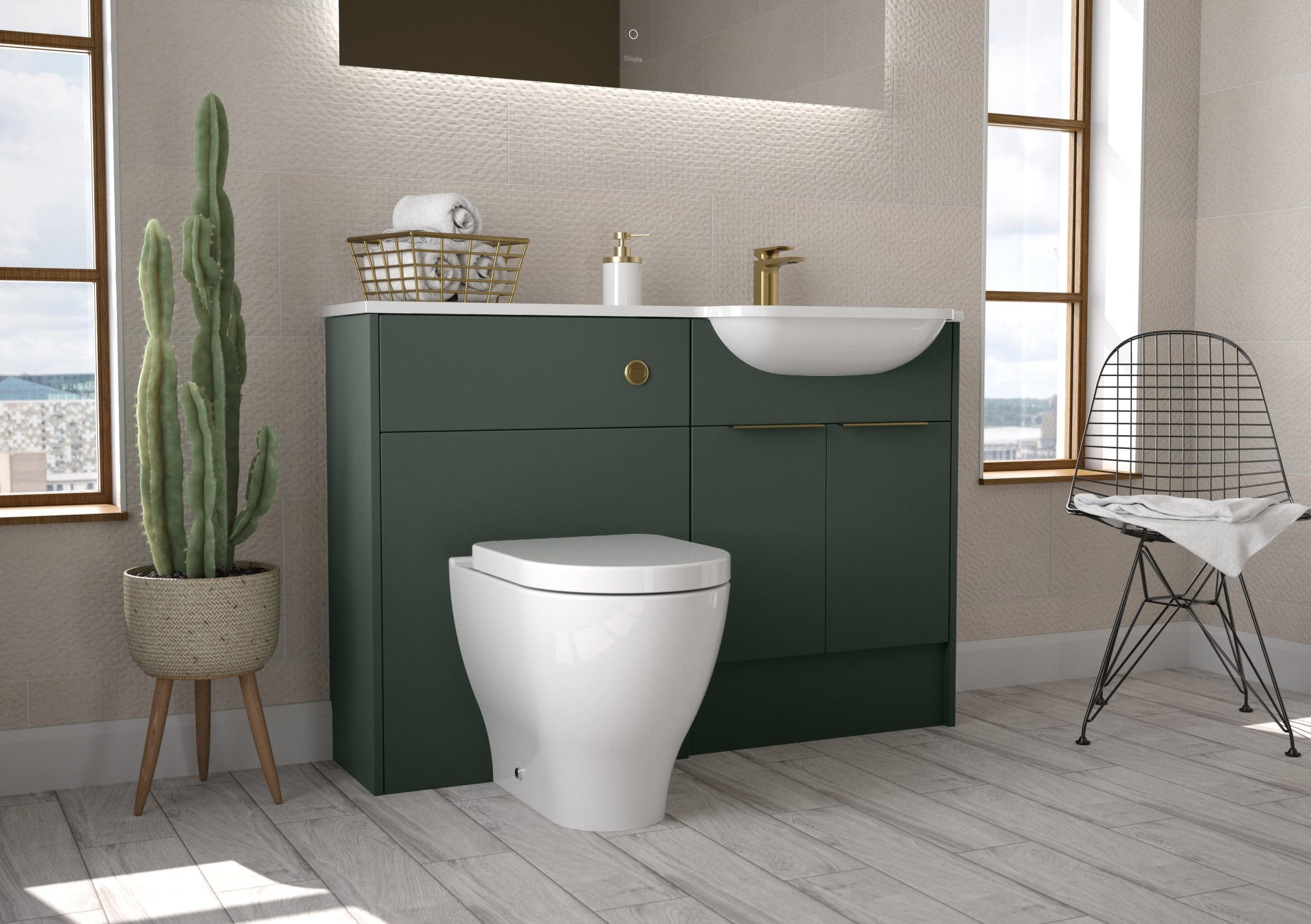
These installations are often integrated with fitted bathroom furniture collections, where pipe alignment must be carefully coordinated.
Basin Plumbing Layout & Pipe Positioning
Basin plumbing offers more flexibility but still requires accurate measurement.
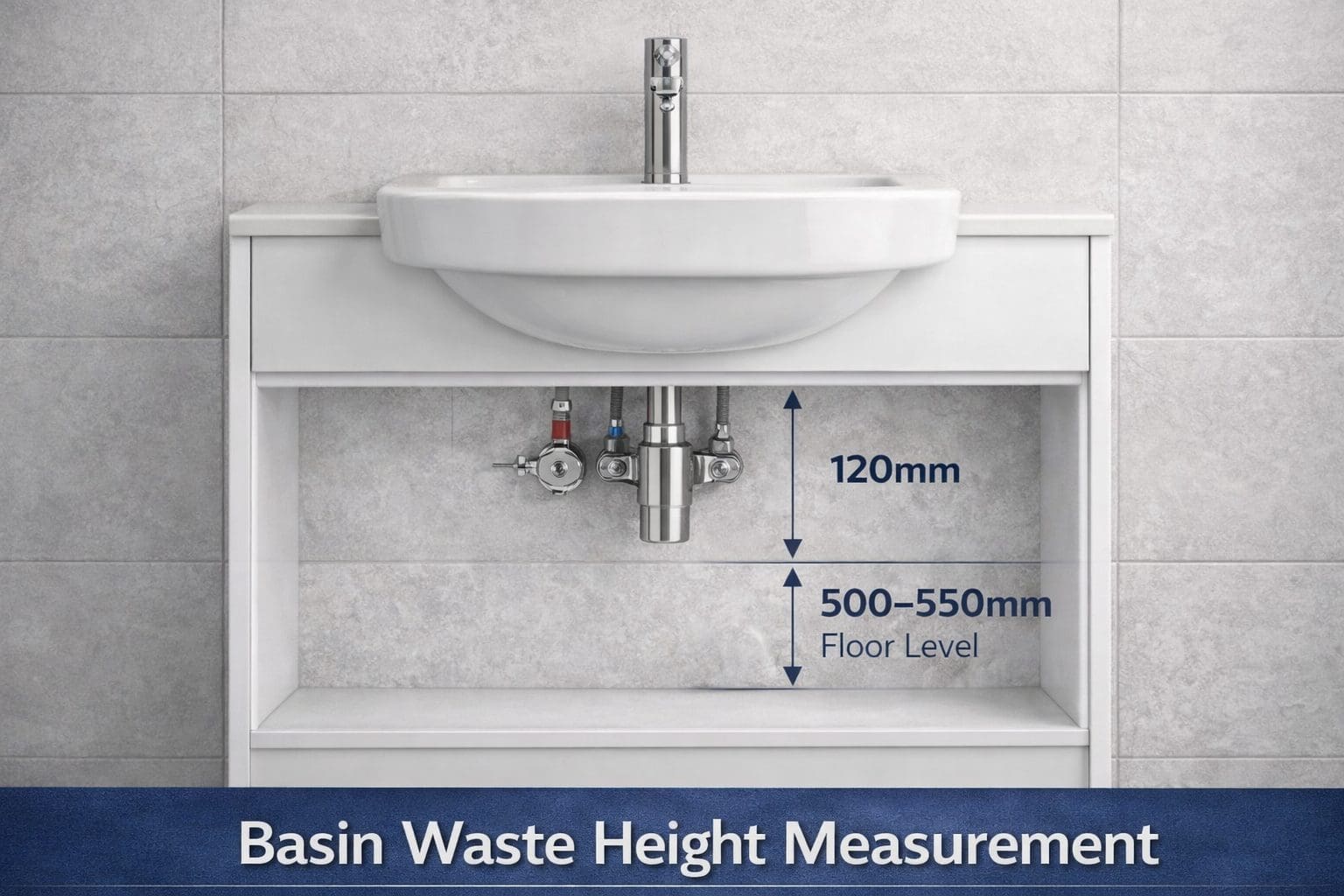
Standard Pedestal Basin
- Waste pipe: 32mm
- Waste height: 500–550mm from finished floor
- Hot/cold feeds: 150–200mm apart
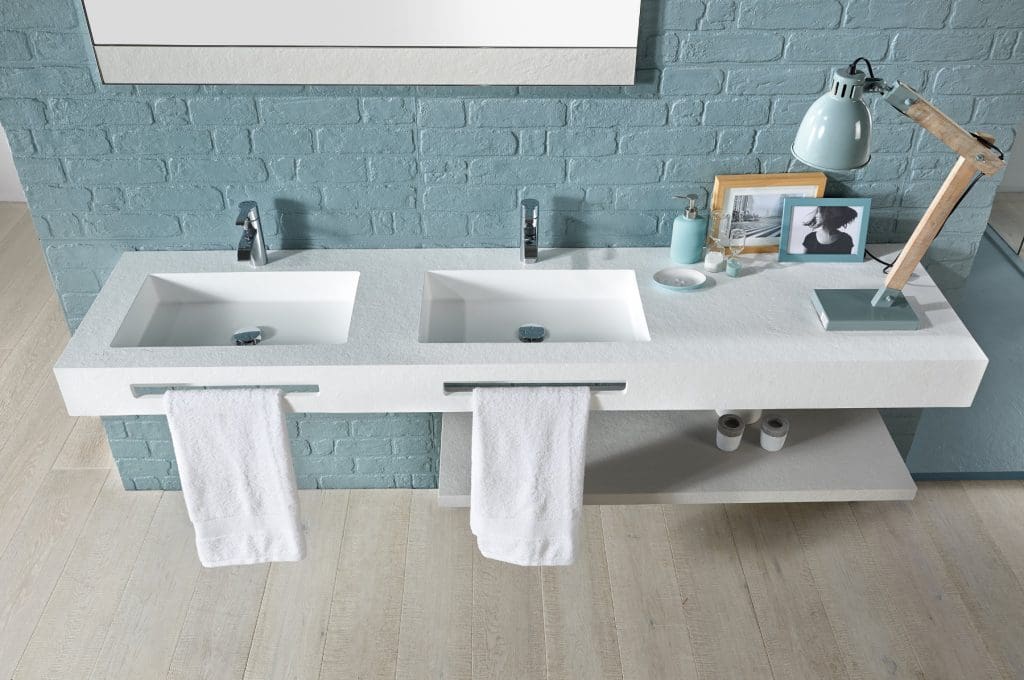
Vanity Units & Furniture Basins
Bathroom plumbing layouts UK homes now favour often include floating or floor standing vanity units. These require:
- Service void behind cabinet (typically 50mm minimum)
- Waste aligned with drawer cut-outs
- Isolation valves accessible
Poor coordination between pipework and chosen furniture can reduce storage space or require costly reworking.
Shower Plumbing Layouts in UK Homes
Shower drainage is one of the most technically sensitive elements within bathroom plumbing layouts UK installations require.
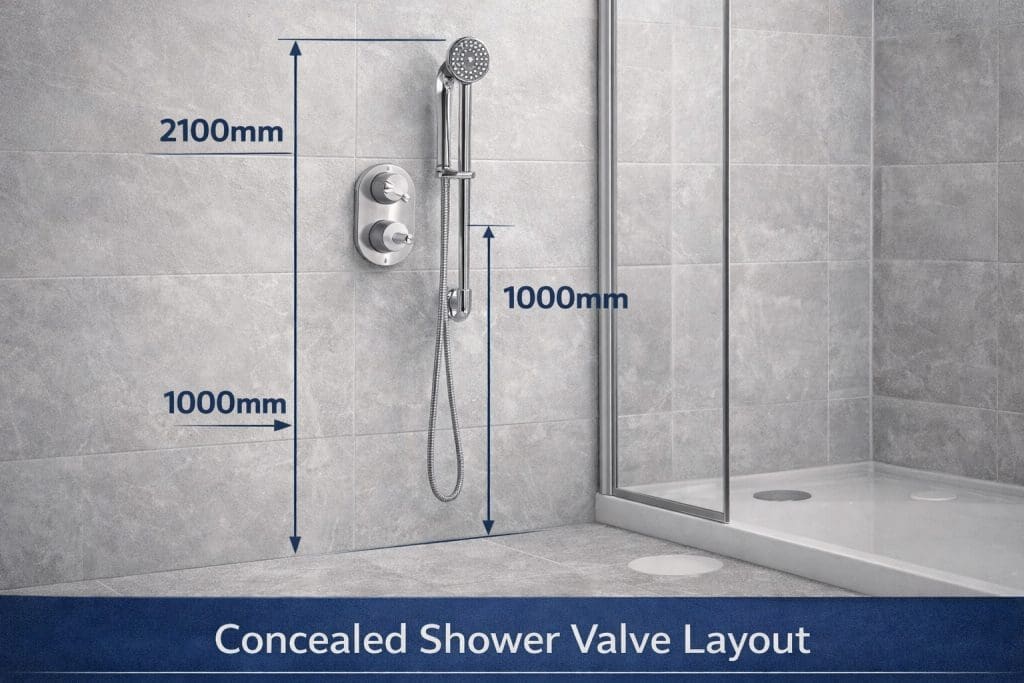
Concealed Shower Valve Position
- Valve height: 900–1100mm
- 15mm hot and cold feeds
- Outlet to shower head: 1800–2100mm
Shower Waste & Drainage Gradient
- Waste pipe diameter: 40mm
- Recommended fall: approximately 1:40
- Floor build-up must accommodate trap depth
In upstairs bathrooms with timber joists, floor void depth often limits pipe routing. In ground-floor solid concrete installations, drainage channels may require cutting into the slab.
Bath Plumbing Layout Considerations
Bath installations vary depending on tap specification.
Standard Bath Installation
- 40mm waste
- Trap beneath bath
- Access panel required
- 15mm feeds at tap end
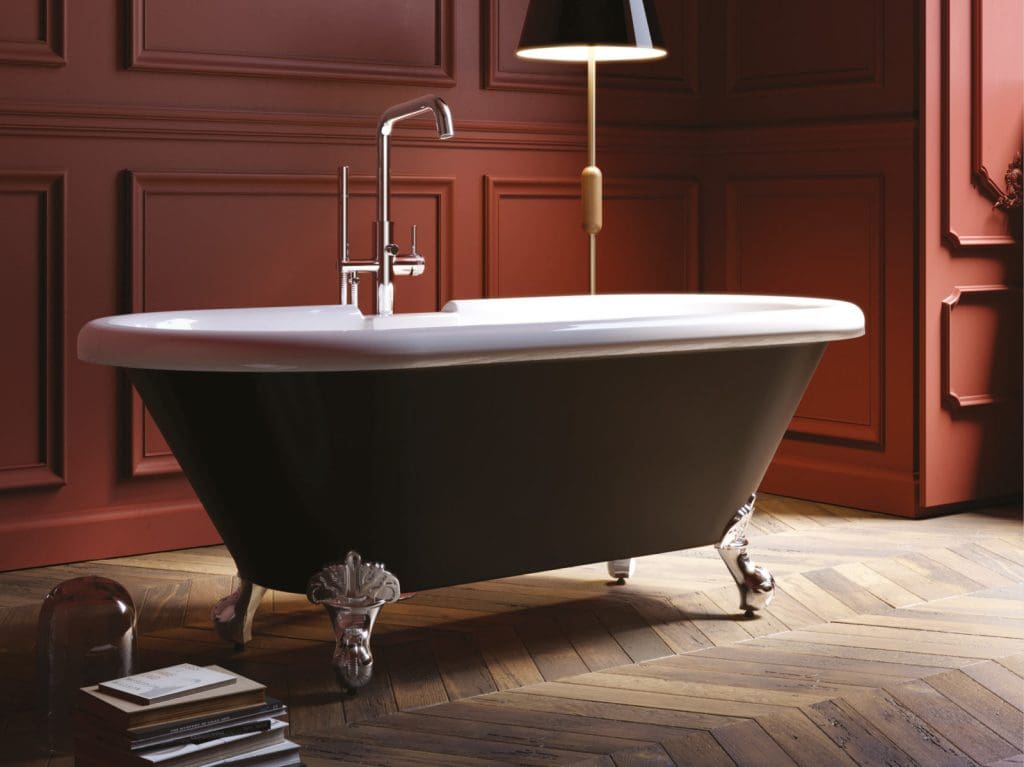
Wall-Mounted Bath Fillers
Increasingly specified in contemporary bathroom plumbing layouts UK homeowners request.
Require:
- Accurate centre spacing
- Precise horizontal alignment
- Structural wall support
Wall-mounted brassware must align perfectly with finished tiling, meaning first-fix pipe positioning must be exact.
First-Fix and Second-Fix Plumbing Explained
Understanding these stages is critical in bathroom plumbing layouts UK renovations follow.
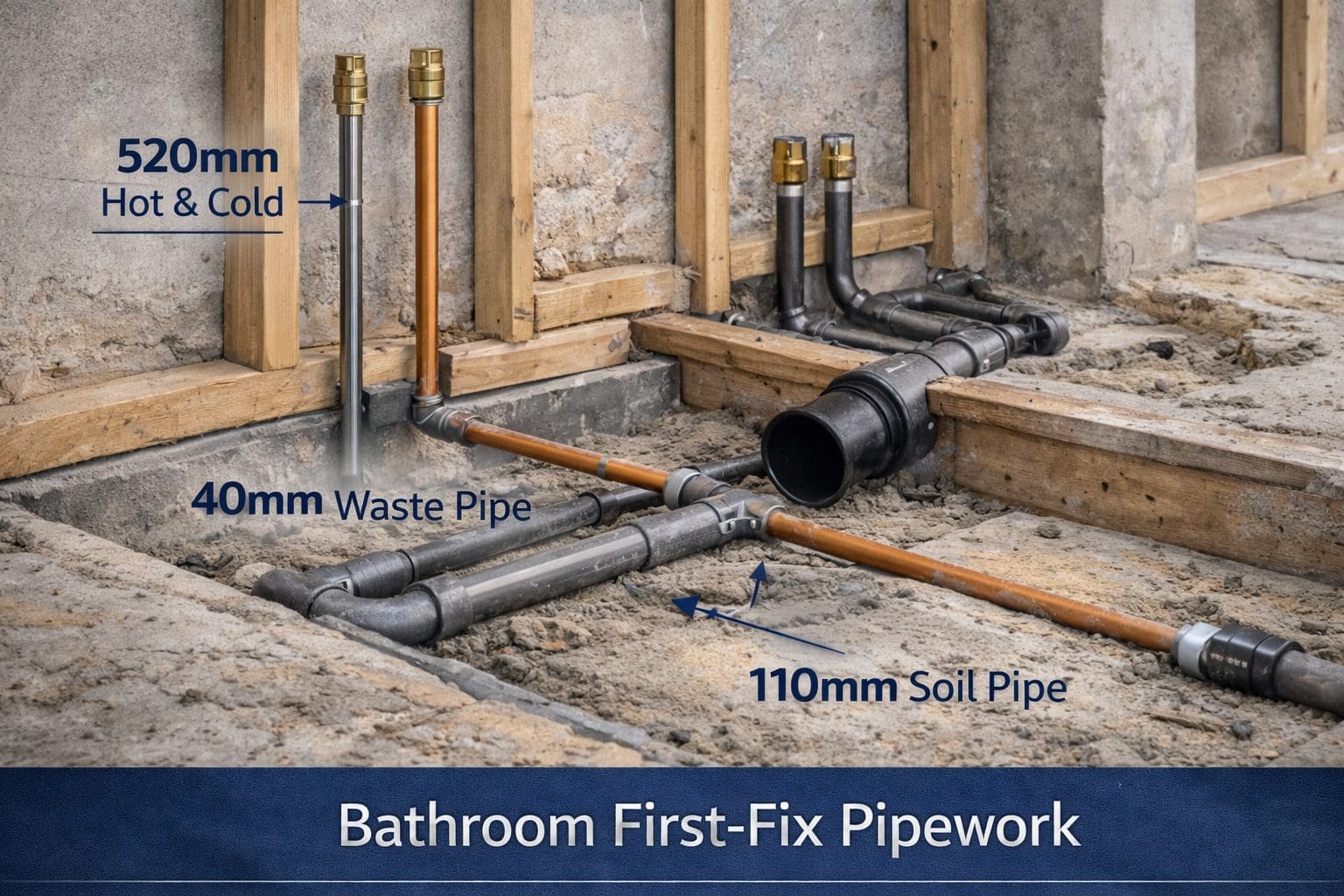
First Fix
- Installation of hidden pipework
- Soil pipe connections
- Drainage routing
- Rough-in measurements
Second Fix
- Installation of visible fixtures
- Taps, valves and sanitaryware
- Connection to first-fix pipework
Errors during first-fix pipe positioning can restrict product selection later. Always confirm manufacturer installation guides before closing walls.
UK Building Regulations & Compliance
Bathroom plumbing layouts UK installations must comply with:
- Approved Document G (Sanitation & hot water safety)
- Approved Document H (Drainage & waste disposal)
- WRAS requirements
Key technical points include:
- Adequate soil stack ventilation
- Minimum 75mm trap seal depth
- Prevention of backflow contamination
- Safe hot water temperature control
Compliance ensures long-term reliability and protects against drainage or hygiene issues.
Common Constraints in UK Homes
Victorian & Edwardian Properties
- External soil stacks
- Solid ground floors
- Limited joist depth
1960s–1980s Homes
- Concrete floors downstairs
- Fixed drainage runs
Flats & Apartments
- Concrete slab limitations
- Restricted drainage fall
- Limited soil stack relocation options
Bathroom plumbing layouts UK flats use are often the most restrictive due to structural slab constraints.
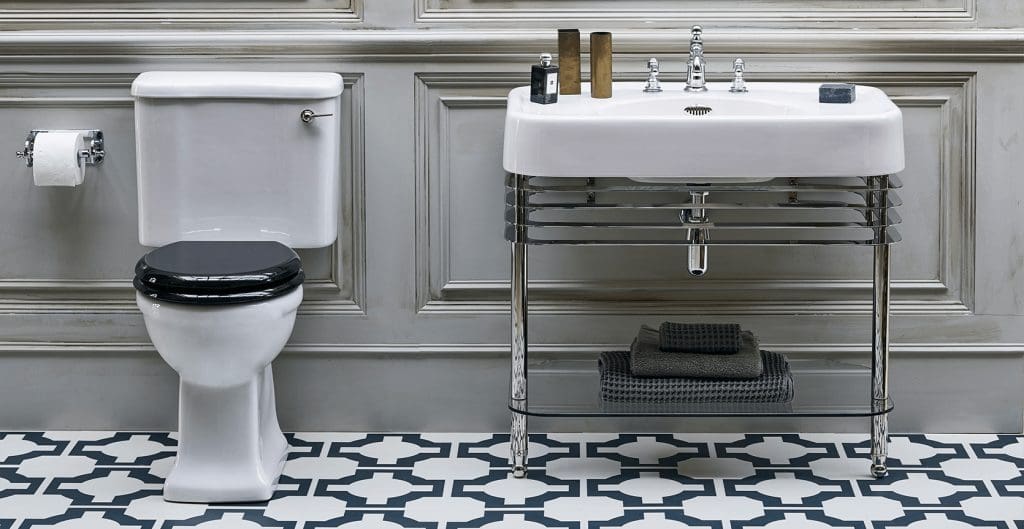
Can You Change Bathroom Plumbing Layouts in UK Homes?
When reviewing bathroom pipework planning, always assess structural limitations before committing to relocation.
- Moving a Toilet
Most complex and costly change due to soil pipe diameter and gravity requirements.
- Moving a Shower
Possible if adequate floor depth allows correct waste fall.
- Moving a Basin
Usually easiest modification within stud walls.
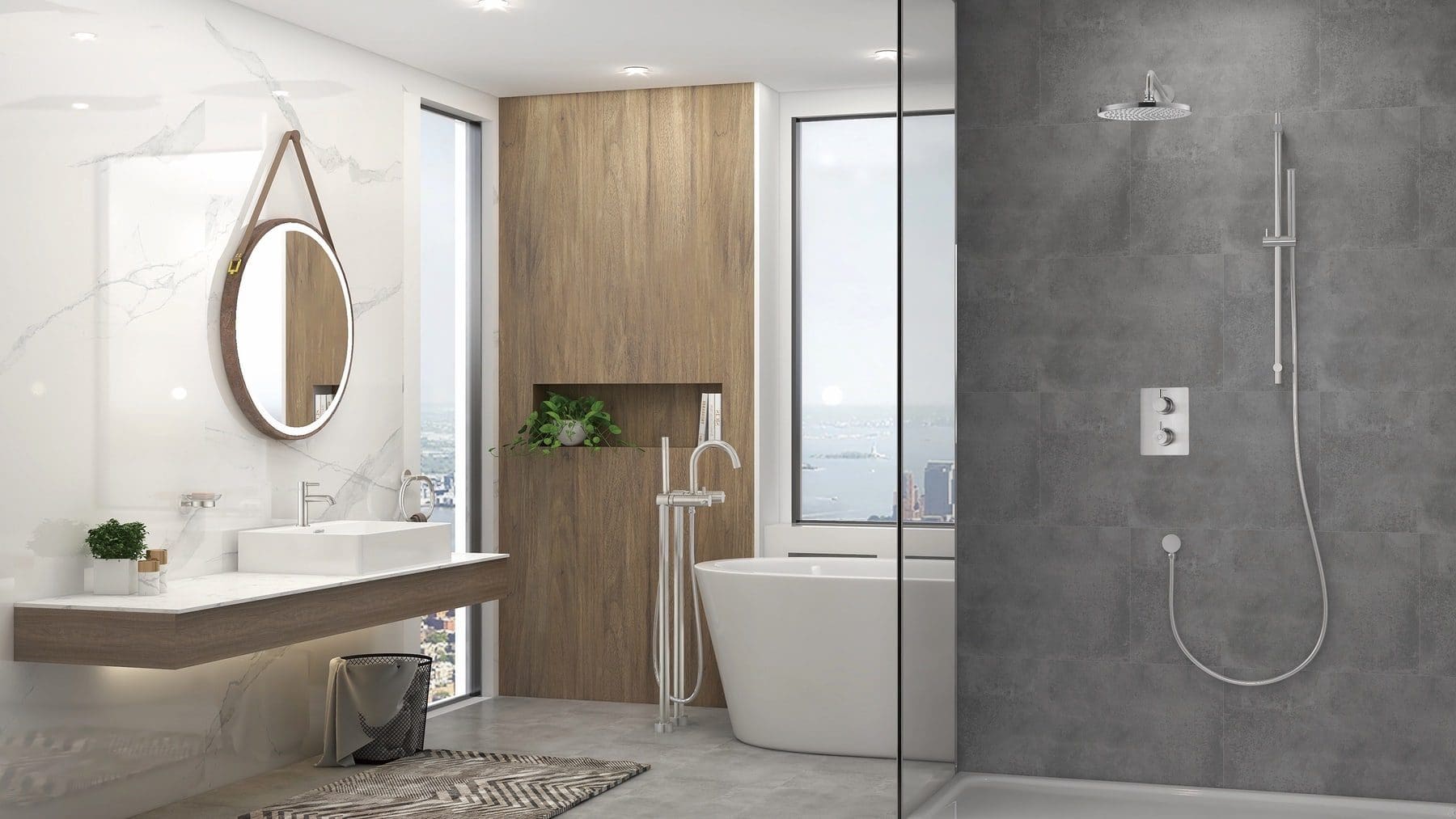
2026 Trends in Bathroom Plumbing Layouts UK Renovations
Modern layouts increasingly prioritise:
- Wall-hung sanitaryware
- Walk-in shower enclosures
- Slimline shower trays
- Concealed thermostatic valves
- Floating furniture
These trends require early plumbing coordination and accurate rough-in dimensions.
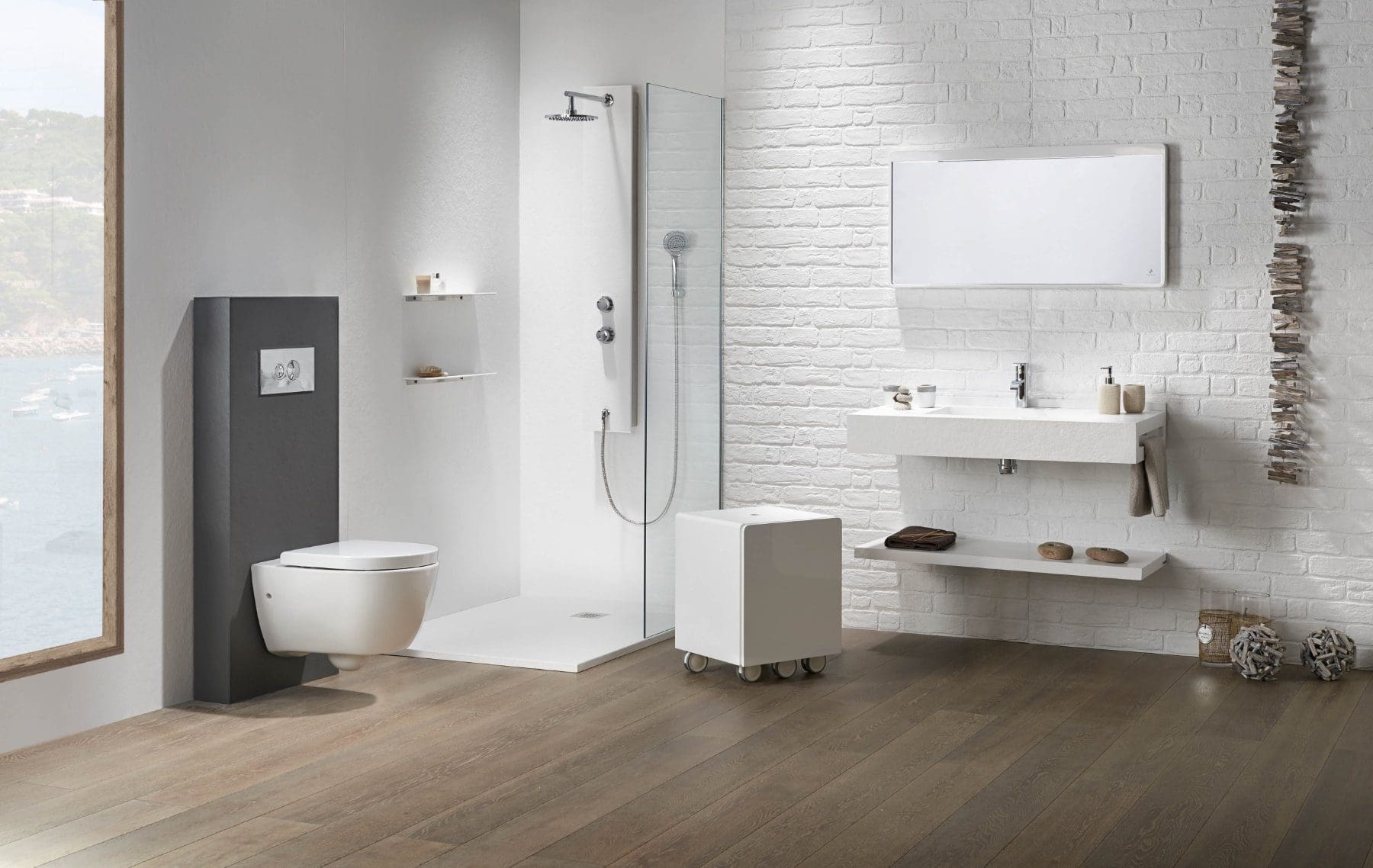
Planning Checklist for Bathroom Plumbing Layouts UK Projects
- Identify soil stack location
- Confirm floor construction
- Measure void depth for drainage
- Confirm water pressure
- Select sanitaryware before finalising pipe positions
- Confirm manufacturer installation drawings
- Leave service access points
Planning bathroom plumbing layouts UK homes need carefully at the outset reduces structural intervention and ensures design flexibility.
Frequently Asked Questions on UK Bathroom Plumbing
What are standard bathroom plumbing layouts UK installers follow?
Typically soil pipes are positioned at 180–230mm, basin waste at 500–550mm and shower valves at 900–1100mm.
How much fall does a shower waste pipe need?
Around 1:40 gradient for reliable drainage.
Can I move my toilet anywhere?
Not easily. The 110mm soil pipe must maintain gravity fall to the stack.
What pipe size is used for UK shower waste?
Generally 40mm in domestic bathrooms.
Do wall-hung toilets complicate plumbing layouts?
They require concealed frames and precise alignment but are common in modern designs.
Are bathroom plumbing layouts UK regulated?
Yes. Installations must comply with Building Regulations and WRAS standards.
Final Thoughts
Bathroom plumbing layouts are the structural framework behind every successful renovation. Understanding how bathroom plumbing layouts UK homes depend on are configured allows you to design within realistic constraints rather than against them.
By identifying soil stack positioning, confirming drainage gradients and aligning pipework with chosen sanitaryware before first fix, homeowners can achieve a layout that functions efficiently and supports long-term reliability.
Plumbing should guide design — not limit it.
Author Note
Reviewed by the Bathroom Product Advisory Team at My Bathroom Specialist
This guide reflects aggregated insight from UK installers, supplier technical documentation and residential bathroom renovation planning across contemporary product ranges.