
Everything You Need to Know About Thermostatic Showers
Thermostatic showers have become the gold standard in modern bathroom design — not simply because they look sleek, but because they fundamentally improve safety, comfort and water efficiency. Whether you are renovating a family bathroom, upgrading a walk-in shower, or specifying fittings for a multi-bathroom home, understanding how thermostatic showers work is essential.
At My Bathroom Specialist, we supply and advise on a wide range of bathroom products from leading European and UK brands including Sonas, Ramon Soler, Roman, Acquabella, Decosan, Interlubke and Utopia. Through years of working with homeowners, installers and designers across the UK, we’ve seen a clear shift: customers are no longer choosing showers purely on style — they want performance, safety compliance and long-term reliability.
This guide explains how thermostatic showers work, how they differ from manual and electric showers, when you need one, pressure considerations, safety regulations in the UK, and how to choose the right option for your bathroom layout.
What Is a Thermostatic Shower?
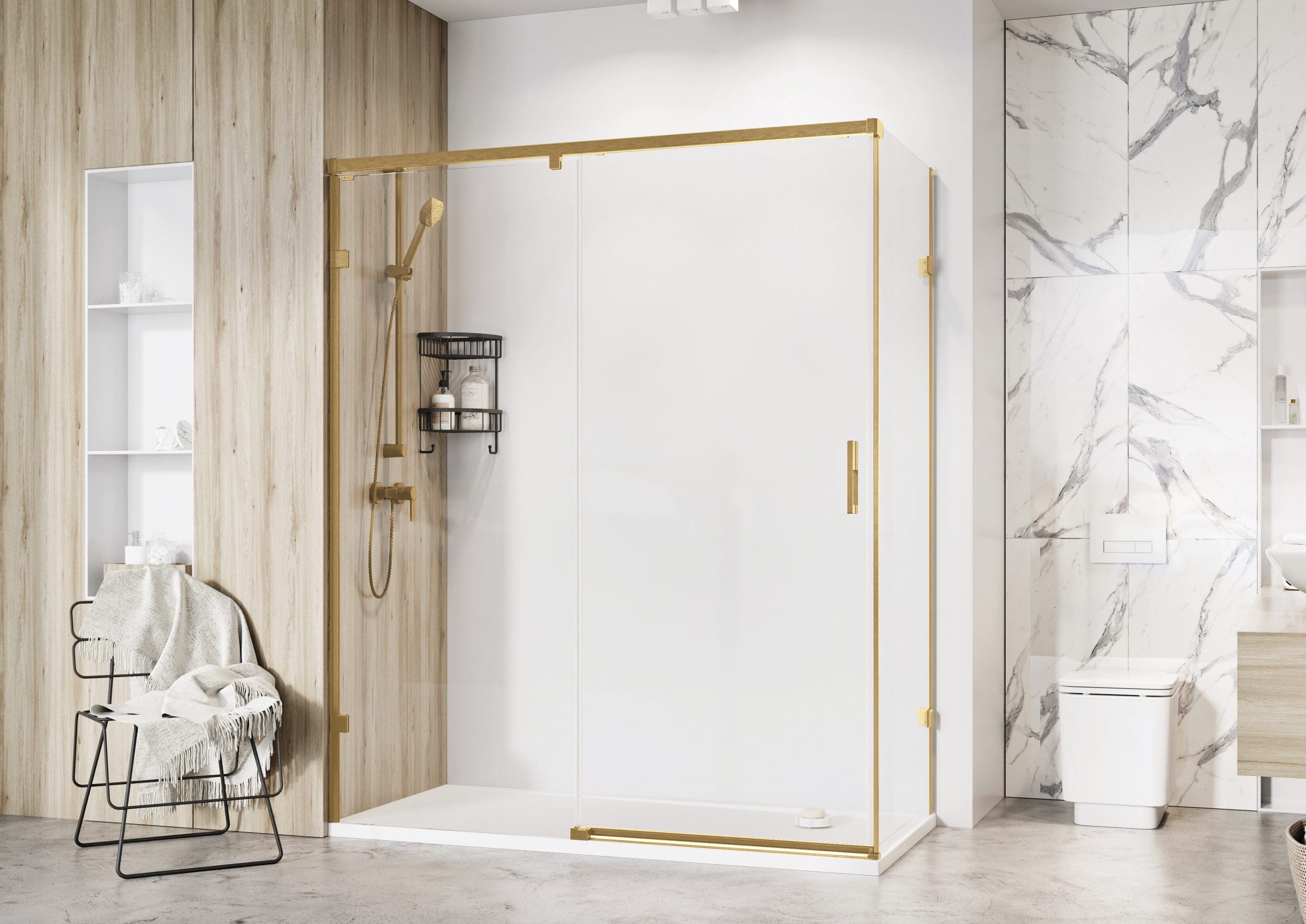
A thermostatic shower is a shower system fitted with a temperature-sensitive valve that automatically maintains a consistent water temperature by balancing hot and cold water supplies. If water pressure changes elsewhere in the home (for example when a tap or toilet is used), the thermostatic valve instantly adjusts to prevent sudden temperature fluctuations or scalding.
Why Thermostatic Showers Have Become Standard in UK Bathrooms
Most top-ranking competitors explain safety benefits but often fail to connect this to real-life scenarios. In UK households — particularly family homes — temperature stability is more than a luxury.
Common real-world situations include:
- A toilet flushing while someone is showering
- A washing machine drawing hot water
- Older pipework causing pressure imbalance
- Homes with combination boilers experiencing flow variation
Without a thermostatic valve, these changes can cause sudden bursts of very hot or cold water. A thermostatic shower compensates instantly.
For families with children, elderly users, or anyone with reduced mobility, this added layer of safety is essential.

How a Thermostatic Shower Works
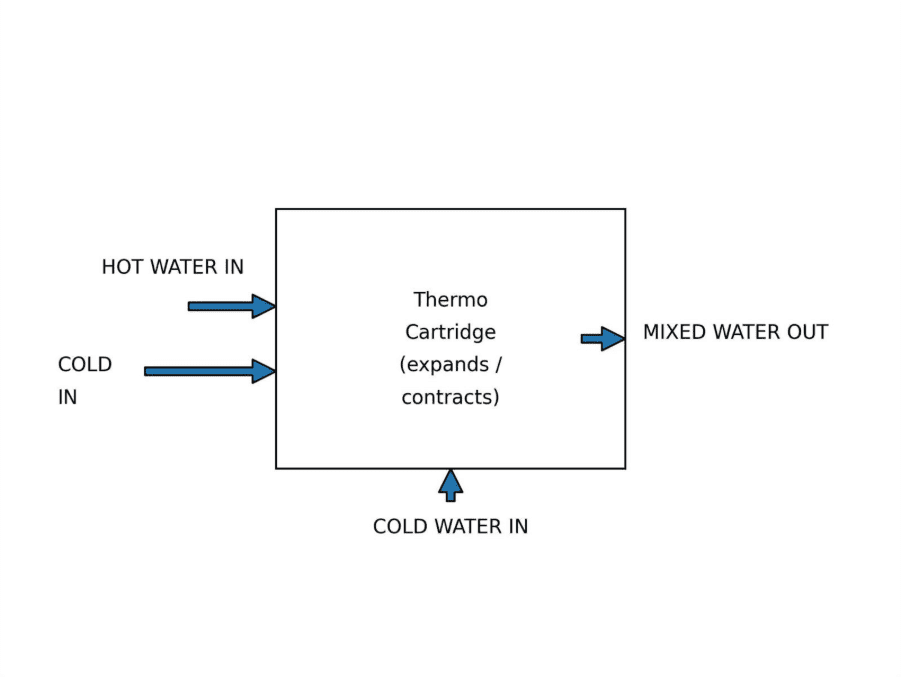
At the heart of the system is a thermostatic mixing valve (TMV). Inside the valve is a heat-sensitive cartridge that expands or contracts depending on water temperature.
If cold water pressure drops:
- The cartridge detects rising temperature.
- It reduces hot water flow.
- Temperature stabilises within seconds.
If hot water pressure drops:
- The cartridge allows more hot water through.
- The balance is restored.
Thermostatic vs Manual vs Electric Showers
Competitor pages often oversimplify this comparison. Here’s a clearer decision framework:
| Feature | Thermostatic | Manual Mixer | Electric |
| Maintains consistent temperature | ✔ Yes | ✘ No | ✔ Yes |
| Responds to pressure changes | ✔ Instant | ✘ No | N/A |
| Requires hot water system | ✔ Yes | ✔ Yes | ✘ No |
| Suitable for combi boilers | ✔ Yes | ✔ Yes | ✔ Yes |
| Best for family safety | ✔ Excellent | Limited | Good |
When to choose a thermostatic shower:
- Family bathrooms
- Homes with pressure variation
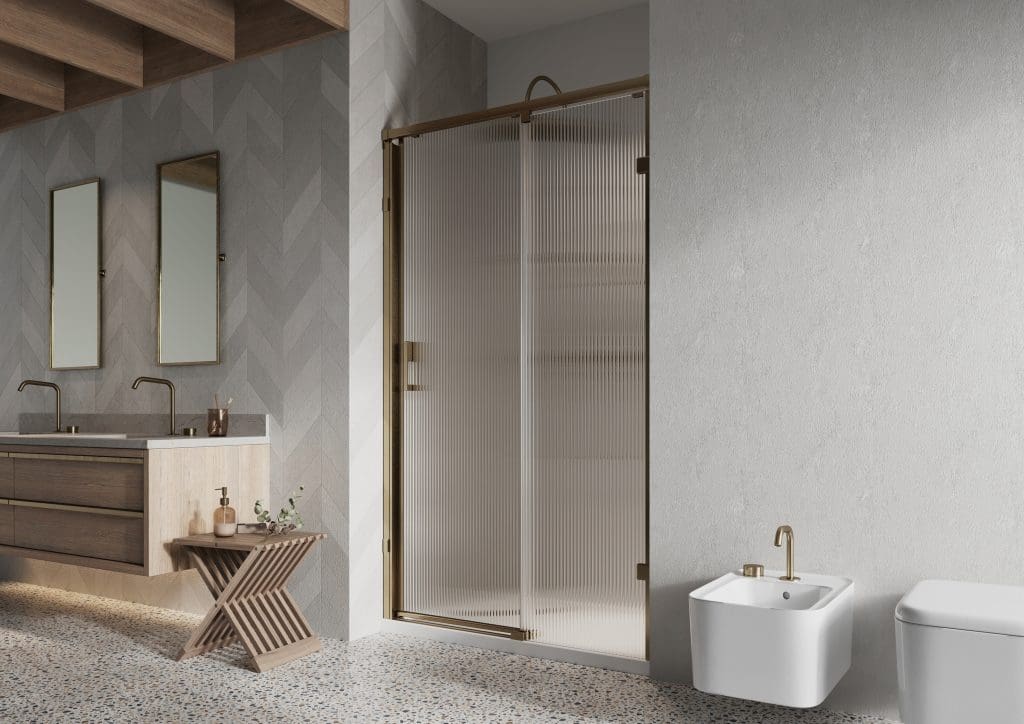
- Luxury shower enclosures (Roman enclosures, for example)
- Walk-in shower spaces with rainfall heads
Pressure & Plumbing Considerations (UK Specific)
A common reason thermostatic showers underperform is mismatched pressure.
Before choosing a shower, consider:
1. Your Boiler Type
- Combi boiler – Typically compatible
- System boiler – Check flow rate
- Gravity-fed tank – May require pump
2. Water Pressure
Most modern thermostatic valves from brands such as Ramon Soler and Sonas operate effectively from 0.5 bar upwards, but rainfall heads may require higher pressure.
3. Balanced Supply
For best performance, hot and cold supplies should be pressure-balanced.
Types of Thermostatic Showers
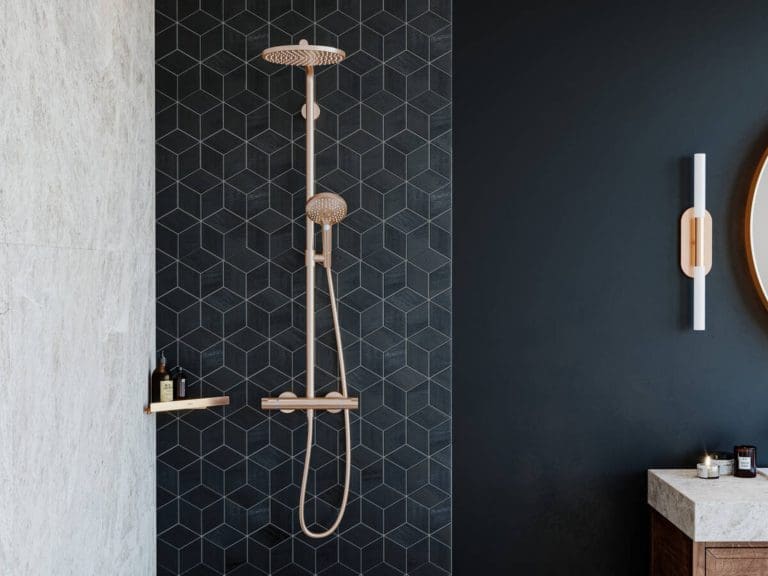
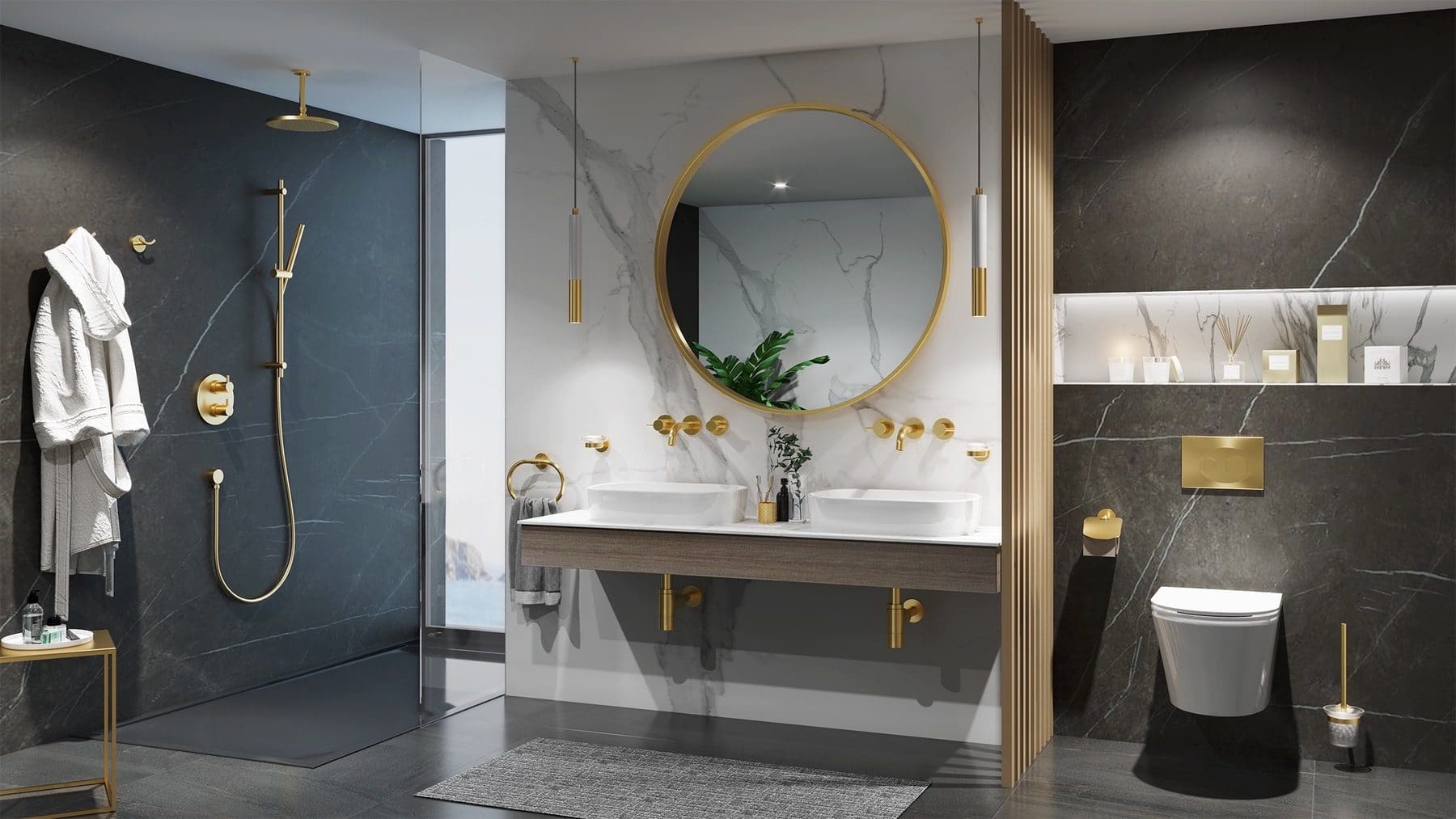
Concealed Thermostatic Showers
- Valve hidden in the wall
- Minimalist finish
- Ideal with Acquabella shower trays and Roman enclosures
Exposed Thermostatic Showers
- Surface-mounted
- Easier installation
- Often cost-effective
Dual Control Systems
- Separate flow and temperature controls
- Better user precision
Digital Thermostatic Showers
- Electronic temperature control
- Programmable settings
- Premium bathrooms
Are Thermostatic Showers a Legal Requirement in the UK?
While not universally mandatory in private homes, TMV2 or TMV3 compliant valves are required in certain environments such as care settings and public buildings.
For domestic bathrooms:
- Building Regulations Part G encourages scald protection
- Many new builds install thermostatic mixers as standard
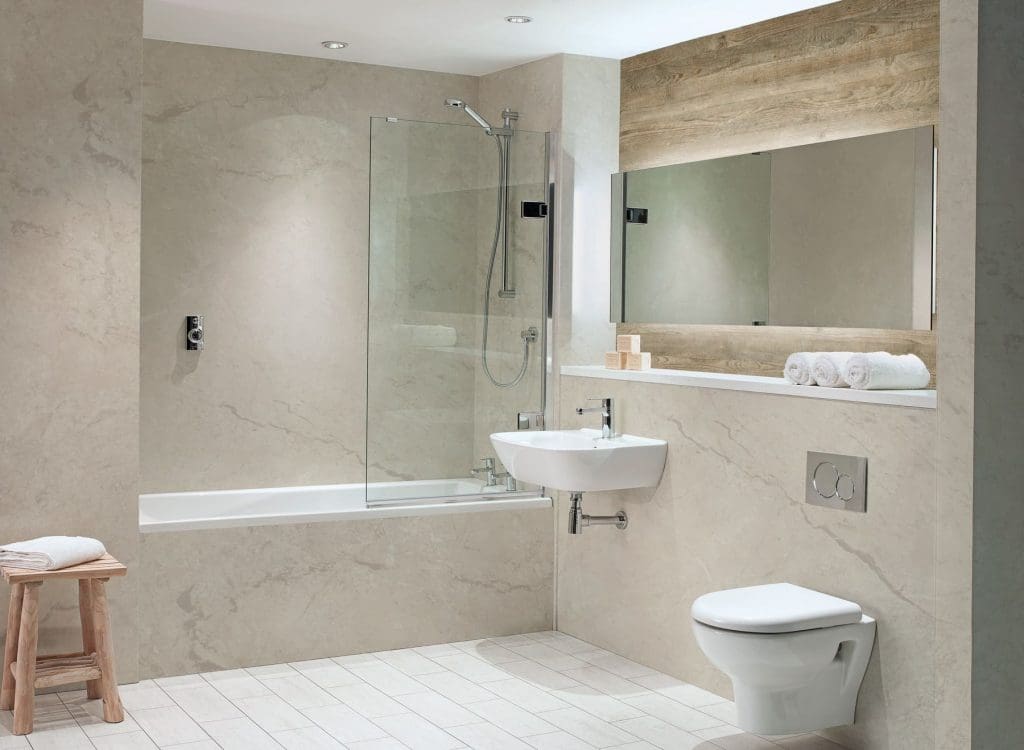
Thermostatic Showers & Modern Bathroom Design (2026 Trends)
In 2026, we are seeing increased integration between shower systems and overall bathroom furniture.
- Utopia and Decosan vanity units paired with minimalist concealed valves
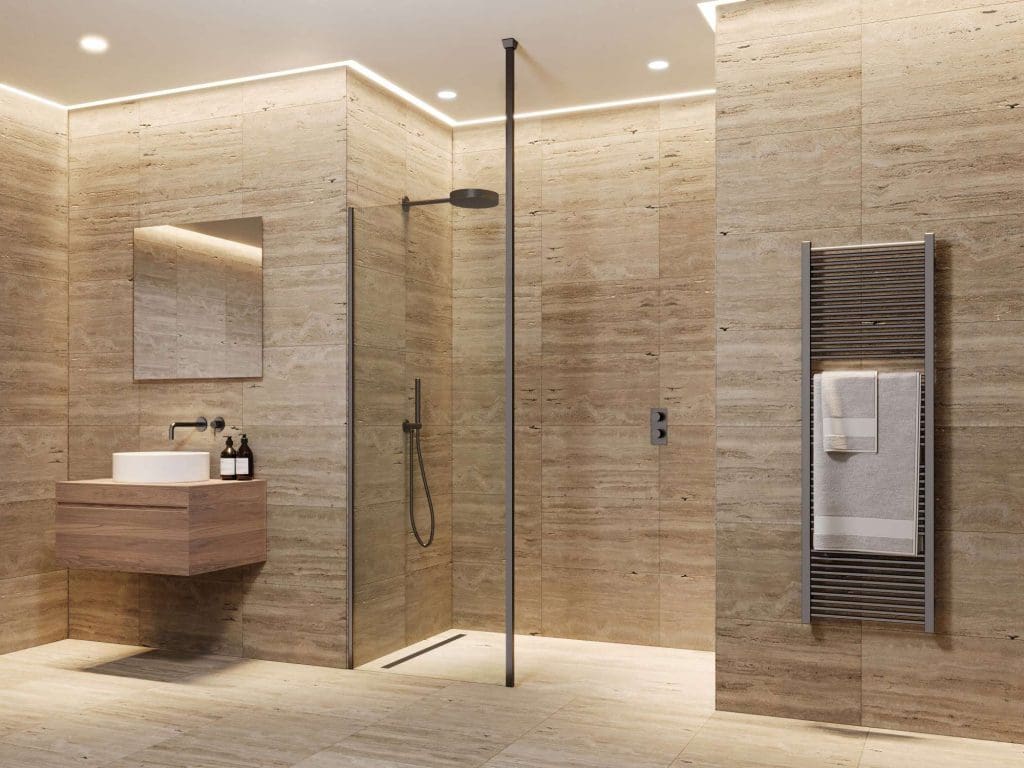
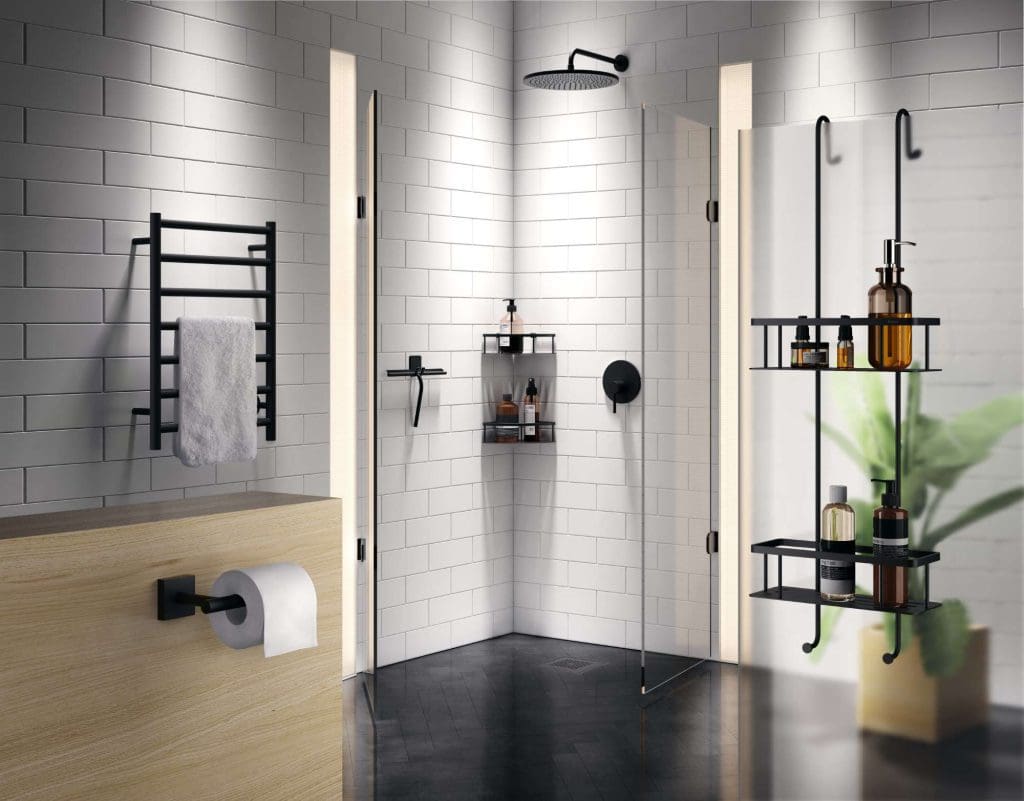
- Matt black and brushed brass finishes rising in popularity
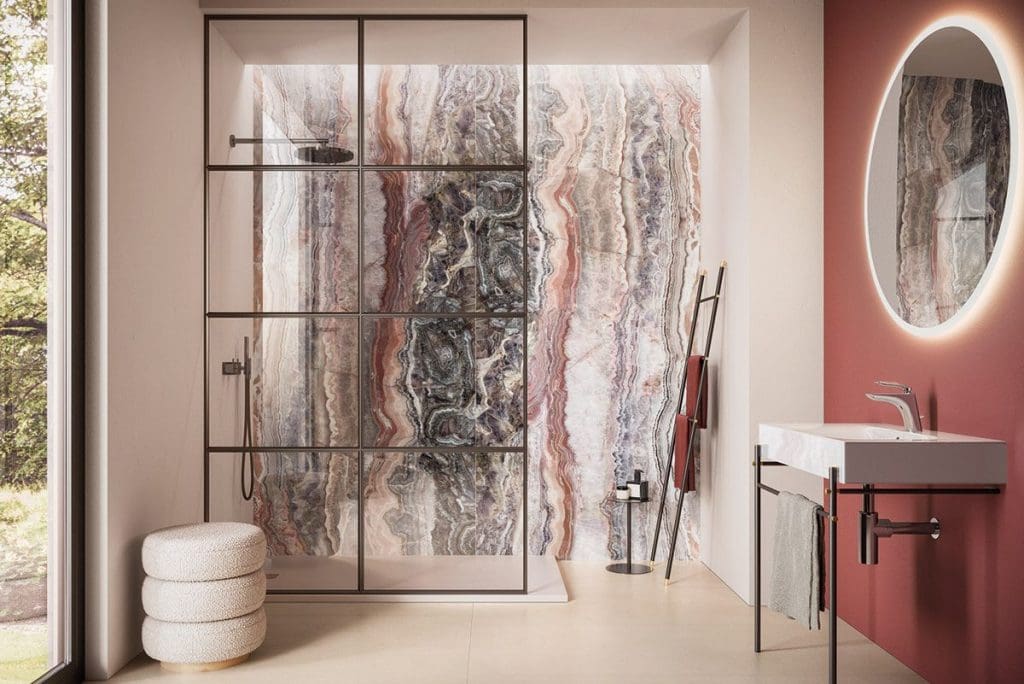
- Larger Roman walk-in panels replacing traditional enclosures
- Ultra-slim Acquabella trays supporting low-profile designs
Thermostatic showers support these designs by allowing larger overhead rainfall heads without temperature instability.
Energy Efficiency & Water Usage
Thermostatic showers:
- Reduce water waste during temperature adjustment
- Minimise excess hot water usage
- Improve efficiency in combi systems
Over time, this can reduce energy consumption compared to manual mixers that require trial-and-error adjustment.
Maintenance & Cartridge Replacement
Most thermostatic valves contain replaceable cartridges. Hard water areas (common across parts of the UK) may require periodic servicing.
Maintenance tips:
- Annual descaling in hard water regions
- Check filters in inlet valves
- Replace the cartridge every 5–10 years if performance drops
Brands such as Ramon Soler are known for accessible cartridge systems.
When a Thermostatic Shower May Not Be Ideal
- Extremely low-pressure gravity systems without a pump
- Properties with a highly unstable hot water supply
- Budget-only refurbishments prioritising cost over safety
In most modern UK homes, however, thermostatic remains the recommended option.
Frequently Asked Questions: Thermostatic Showers
1. Do thermostatic showers work with combi boilers?
Yes. Most modern thermostatic showers are fully compatible with combi boilers, provided pressure and flow rates meet manufacturer requirements.
2. Can a thermostatic shower still go cold?
If the hot water supply fails entirely, the valve may shut off to prevent scalding.
3. Are thermostatic showers worth the extra cost?
For safety, comfort and long-term reliability — particularly in family homes — they are widely considered worth the investment.
4. What is the difference between thermostatic and pressure-balanced?
Thermostatic valves regulate temperature precisely. Pressure-balanced valves respond only to pressure changes.
5. Do they save water?
Yes, by reducing temperature adjustment time.
6. How long do thermostatic cartridges last?
Typically 5–10 years depending on water quality and usage.
Final Thoughts
Thermostatic showers are no longer a premium add-on — they are a modern standard for safety and performance. For UK homeowners upgrading a bathroom in 2026, the question is less “Should I choose thermostatic?” and more “Which thermostatic system suits my layout, pressure and design style?”
By understanding your plumbing system, desired aesthetic and household needs, you can select a solution that delivers consistent comfort for years to come.
Author Note
Reviewed by the Bathroom Product Advisory Team at My Bathroom Specialist
Drawing on aggregated product insight, supplier training and customer feedback across leading European bathroom brands, this guide reflects current best practice for UK residential bathroom installations.